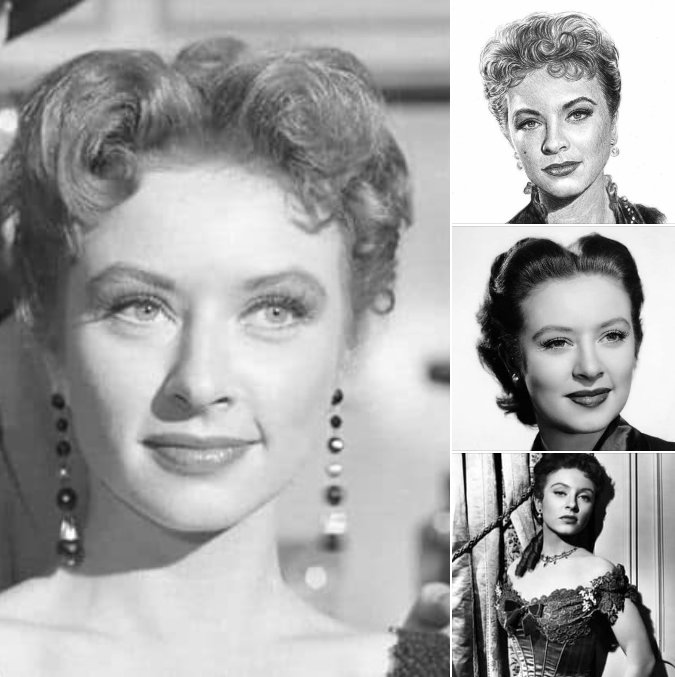
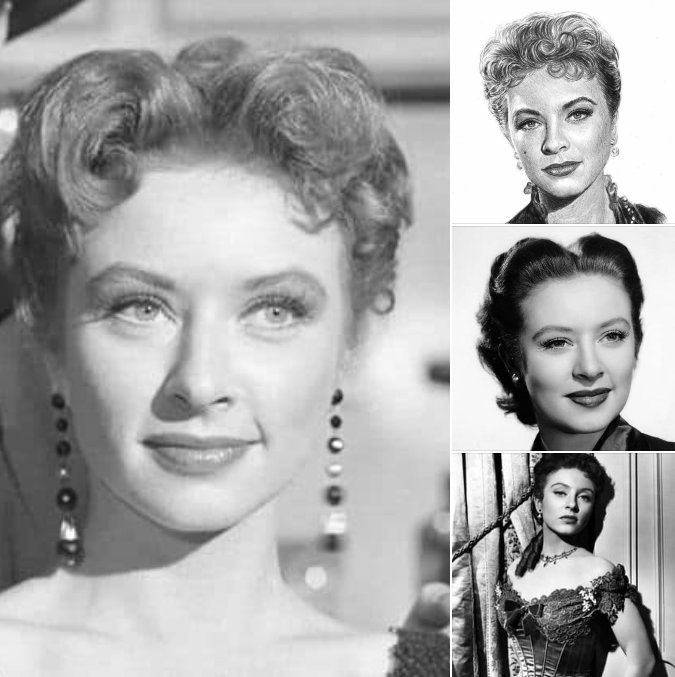
Under the hot glow of television lights and the dusty charm of Dodge City, Amanda Blake became more than just a character — she became an icon. As Miss Kitty Russell on Gunsmoke, she wasn’t merely a saloon owner; she was the heart and soul of the frontier. For nearly two decades, audiences across America tuned in each week not just for gunfights and lawmen, but for that unforgettable woman with the red hair and a laugh that could melt trouble into tenderness.
Amanda Blake was born Beverly Louise Neill on February 20, 1929, in Buffalo, New York. Long before she became Miss Kitty, she was a spirited young woman with a deep voice, quick wit, and a passion for performing. Her journey began in the golden age of Hollywood, starring in films like Miss Robin Crusoe (1954) and A Star Is Born (1954), where her talent hinted at a career that would soon change television forever.
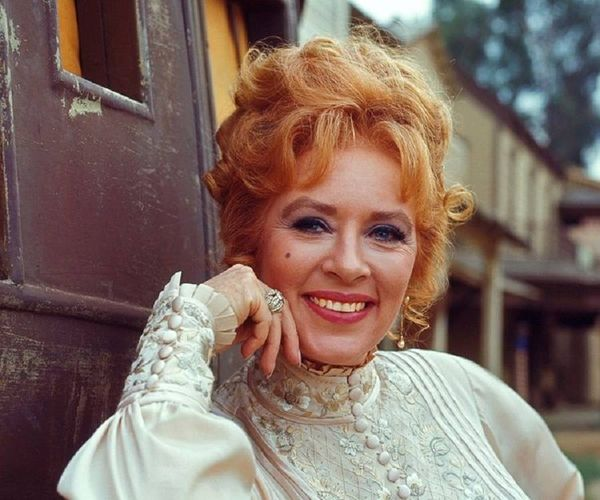
When Gunsmoke premiered in 1955, it was the dawn of a new kind of storytelling — gritty, emotional, and honest. But it was Amanda’s presence that softened the edges. As the strong-willed Miss Kitty, she brought warmth to the Western landscape. Her chemistry with James Arness, who played Marshal Matt Dillon, was electric yet restrained — a love story that never needed to be spoken to be understood.
For fans, Kitty Russell represented something rare in that era: independence. She ran her own business, commanded respect, and refused to be defined by any man. Amanda infused her with humanity, grace, and quiet defiance, giving generations of women a character who proved strength could coexist with compassion. Behind her smile, there was always mystery — a hint that Kitty had lived, loved, and lost more than she let on.
Offscreen, Amanda Blake was just as remarkable. She was deeply committed to the well-being of animals, devoting her fame and resources to causes most celebrities ignored at the time. In the 1970s, she co-founded the Arizona Animal Welfare League, which remains the state’s oldest and largest no-kill shelter. Her compassion extended far beyond Hollywood, touching the lives of countless creatures who would never know her name but benefited from her heart.
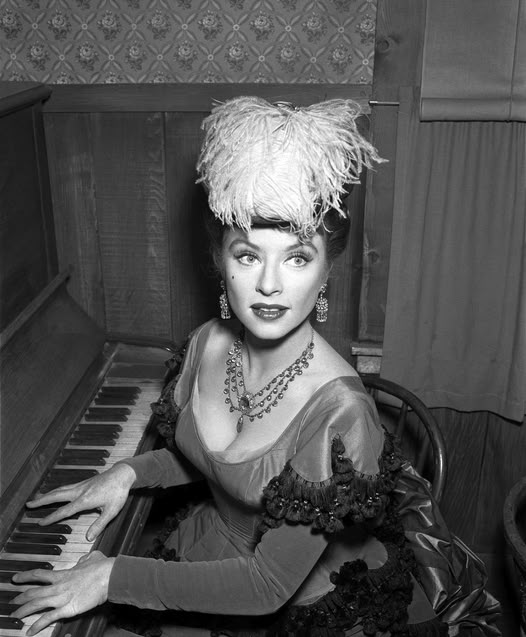
“She believed animals reflected the best of humanity,” a friend once said. Amanda often repeated her favorite line: “If you want to see the measure of a person, look at how they treat animals.” It wasn’t just a quote — it was her philosophy. Her home in Arizona became a sanctuary, a place where rescued creatures roamed freely, and where the woman once known as Miss Kitty found real peace.
After leaving Gunsmoke in 1974, Amanda stepped away from Dodge City but never from the spotlight entirely. She appeared in television movies and made occasional public appearances, always gracious, always genuine. But as the years passed, she dedicated more time to painting, advocacy, and the quiet joy of life away from the studio lights.
Her departure from Gunsmoke marked the end of an era. Viewers mourned the absence of Miss Kitty, the woman who had been a constant for nearly two decades. Yet Amanda’s decision to leave was an act of courage — a recognition that she had given all she could to a role that defined her, and now she needed to define herself beyond it.
In her final years, Amanda faced health challenges but remained unwavering in spirit. Friends described her as serene, often found sketching or caring for her beloved pets. She once said she found more truth in the eyes of an animal than in most people she met in Hollywood. To the end, she embodied grace under fire — a woman of strength, humor, and immense heart.
Amanda Blake passed away in 1989 at the age of 60, leaving behind a legacy that continues to gallop through time. Every rerun of Gunsmoke brings her back to life — that unmistakable entrance, that teasing glance, that laugh echoing through the Long Branch Saloon. She remains a part of American television’s golden fabric, a reminder of when storytelling was simple but characters were profound.
Today, as fans rewatch those black-and-white frames, they see more than nostalgia — they see a woman who helped define an era of television and left an imprint that compassion can be as powerful as any six-shooter. Amanda Blake gave Dodge City its heart, and in doing so, she gave a piece of hers to everyone who ever watched her ride across the screen.