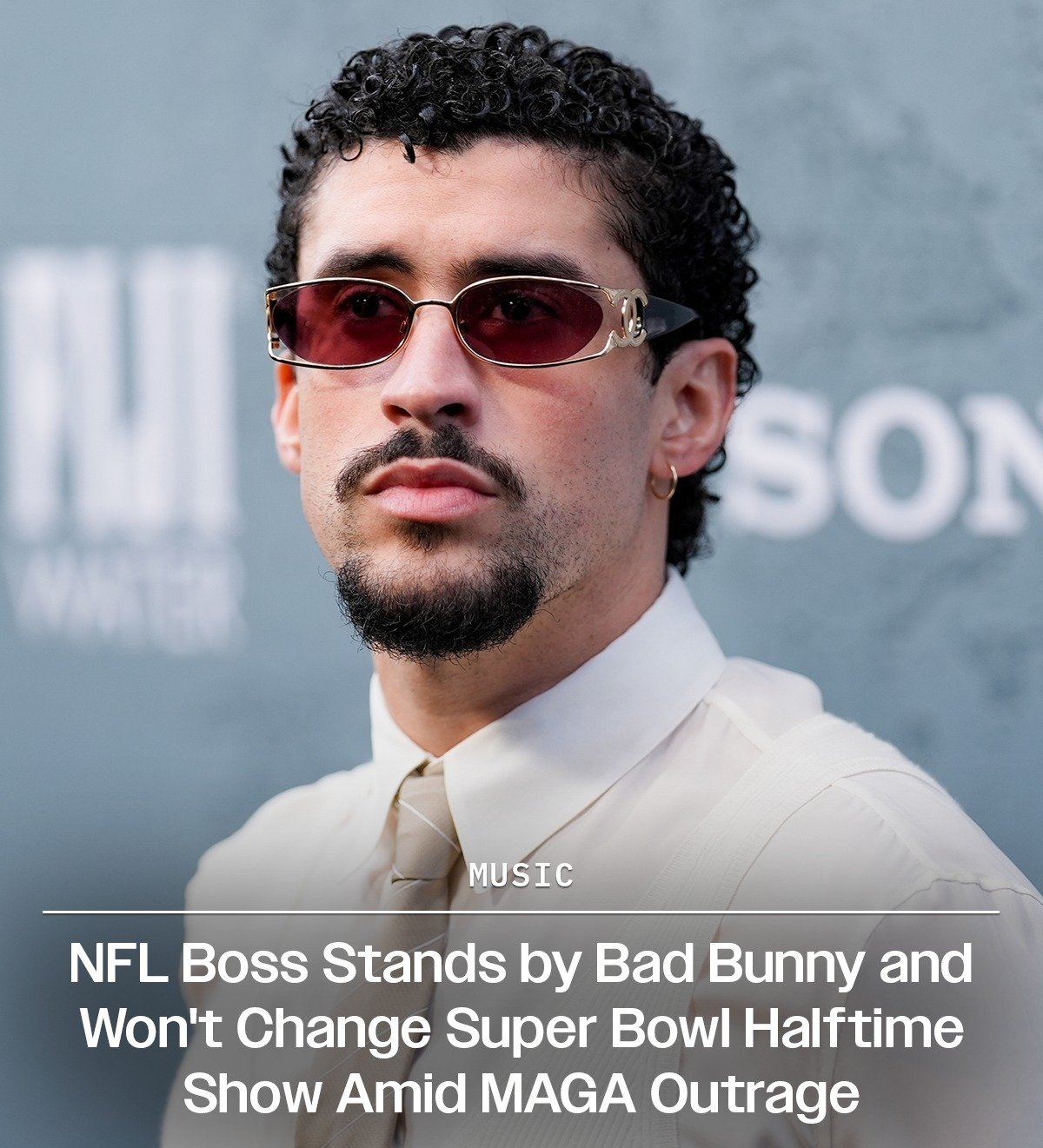
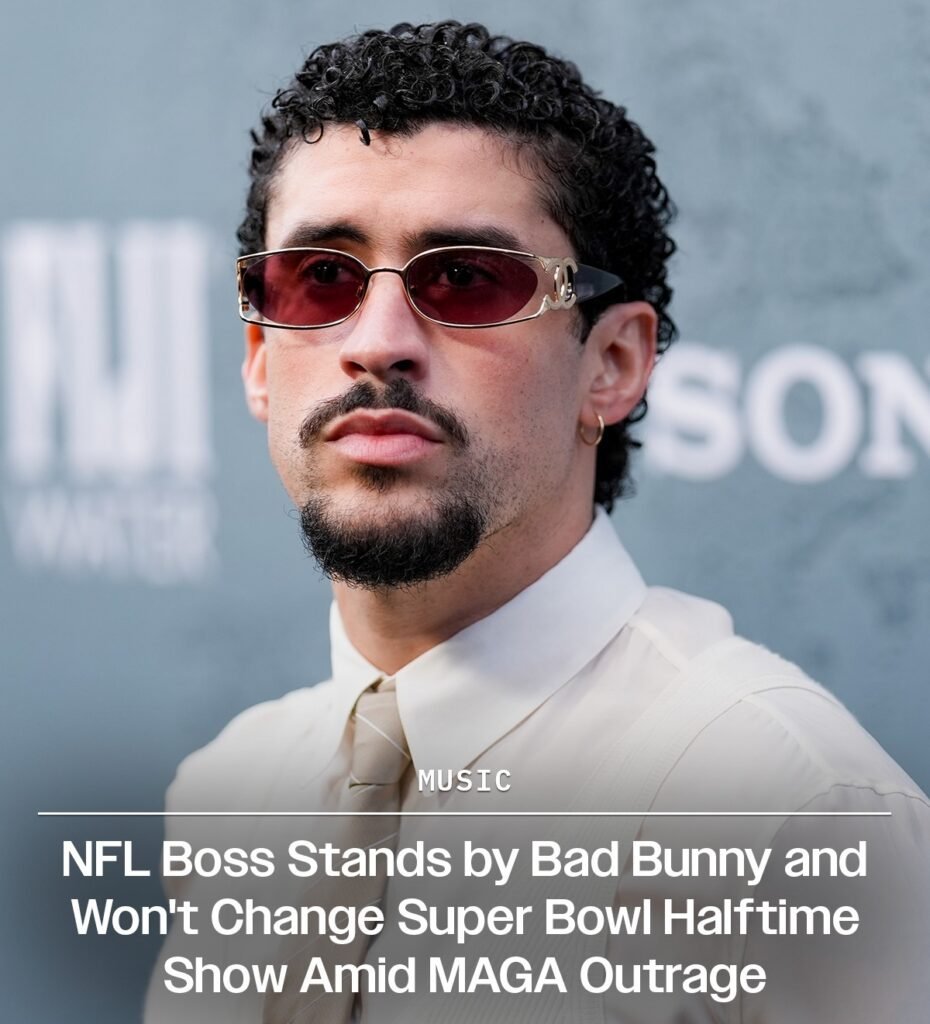
In a move that has both thrilled fans and ignited a political firestorm, the NFL has officially confirmed that Bad Bunny will headline the 2026 Super Bowl Halftime Show, brushing aside calls from conservative groups and MAGA supporters demanding a reversal. Commissioner Roger Goodell stood firm, declaring that the decision was made with care and confidence — and that the league fully supports one of the world’s most dynamic performers.
“It’s carefully thought through,” Goodell told the Associated Press. “I’m not sure we’ve ever selected an artist where we didn’t have some blowback or criticism. It’s pretty hard to do when you have literally hundreds of millions of people watching. We’re confident it’s going to be a great show. He understands the platform that he’s on, and I think it’s going to be exciting and a united moment.”
Goodell’s remarks underscore the NFL’s long-standing commitment to diversity and cultural representation on its biggest stage. Over the past decade, the league has transformed the Halftime Show from a mere musical interlude into a global celebration of artistry and influence — featuring everyone from Beyoncé and The Weeknd to Rihanna and Shakira. Now, the Puerto Rican megastar Bad Bunny, known for his genre-blending reggaeton, Latin trap, and unapologetically political voice, is poised to bring his electrifying energy to the world’s most-watched televised event.
MAGA Backlash and Political Controversy
However, the announcement hasn’t been met without fury. Within hours of confirmation, right-wing commentators and MAGA-aligned figures took to social media, accusing the NFL of pushing a “woke” agenda and “alienating American fans.” Some cited Bad Bunny’s outspoken views on Puerto Rican independence, LGBTQ+ rights, and gun control as reasons to boycott the show.
One conservative radio host wrote, “The NFL used to be about football and unity. Now it’s about virtue signaling and politics.” Others argued that Bad Bunny’s past performances — including his cross-dressing appearance in the “Yo Perreo Sola” video and his fiery political statements — made him an “inappropriate” choice for the family-oriented event.
Yet, for every critic, there have been twice as many supporters. Fans flooded social media with excitement, using hashtags like #SuperBunnyBowl, #BadBunnyHalftime, and #RepresentationMatters, calling the selection a win for Latin culture and music. “This is historic,” one user wrote on X (formerly Twitter). “A Puerto Rican artist headlining the biggest stage in American sports? It’s about time!”
Bad Bunny: A Global Icon Beyond Music
Born Benito Antonio Martínez Ocasio, Bad Bunny has risen from a supermarket bagger in Vega Baja, Puerto Rico, to a global cultural force. His fearless artistry and unfiltered social commentary have made him one of the most influential voices of his generation. He’s headlined Coachella, dominated Spotify charts, and even stepped into acting, appearing in Bullet Train alongside Brad Pitt.
Beyond entertainment, Bad Bunny has consistently used his platform to advocate for social justice — from protesting government corruption in Puerto Rico to championing gender equality and LGBTQ+ rights. To many, his selection for the Super Bowl represents not just a musical choice, but a statement about inclusion, identity, and progress.
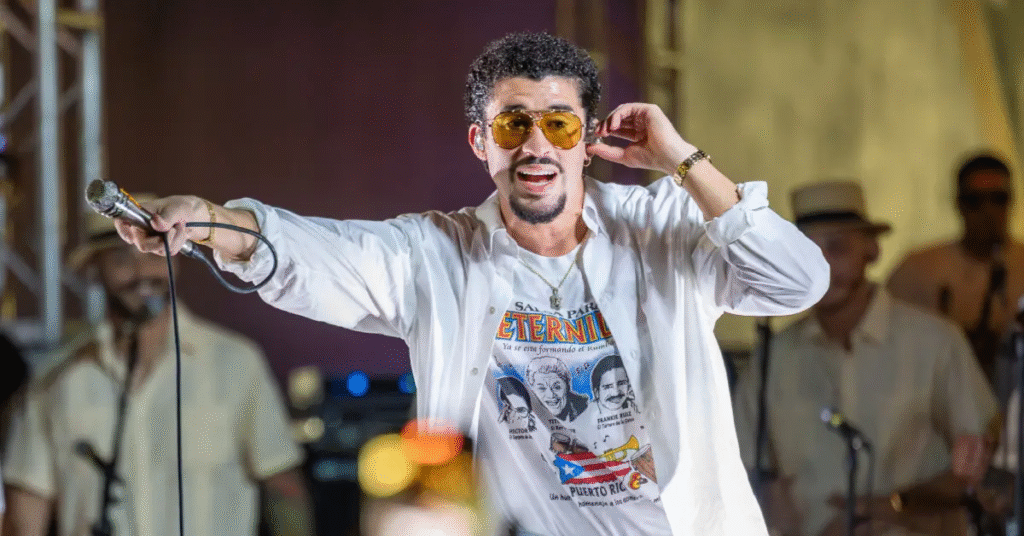
As one culture critic noted, “Bad Bunny isn’t just a performer — he’s a phenomenon. His artistry transcends language and borders. The fact that he sings in Spanish yet sells out stadiums worldwide says everything about his impact.”
The NFL’s Broader Strategy
The NFL’s support of Bad Bunny also reflects its ongoing effort to broaden its global appeal. With the league expanding its international games in Mexico, Germany, and the UK, tapping into Latin America’s massive fan base makes strategic sense. The Halftime Show — which draws more than 100 million viewers globally — is a key opportunity to showcase cultural diversity and cross-market appeal.
“Music and sports are universal languages,” said Goodell. “What we try to achieve every year is to find artists who can bring people together, not divide them. Bad Bunny embodies that spirit.”
Insiders also hint that the performance may include surprise collaborations with major U.S. and Latin artists, possibly blending genres like reggaeton, pop, and hip-hop — a formula that has worked brilliantly in past shows. Given Bad Bunny’s history of high-concept performances, fans can expect something visually groundbreaking and politically resonant.
Standing Firm Amid the Noise
Despite mounting criticism, the NFL seems unshaken. The league has weathered similar storms before — from Janet Jackson’s “wardrobe malfunction” to Beyoncé’s Black Lives Matter-inspired 2016 performance. In each case, controversy only fueled more attention and record-breaking viewership.
This time, the stakes are higher. America’s cultural divisions are more pronounced than ever, and every entertainment choice seems to carry political weight. Yet the NFL appears determined to send a message: the Super Bowl stage belongs to everyone.
As one fan commented, “They can protest all they want, but Bad Bunny represents the new America — diverse, bold, and unafraid.”
With months to go before kickoff, anticipation is already at a fever pitch. Whether it’s hailed as revolutionary or condemned as controversial, one thing is certain — the 2026 Super Bowl Halftime Show will be unforgettable.