It started like any other late-night McDonald’s run — a craving for fries, a quick drive-thru stop, a promise of “I’m lovin’ it.” But by the time the sun came up over Davenport, Florida, one man was in the hospital with a bullet wound in his neck, another was in handcuffs, and a sheriff was standing before cameras calling the entire thing “a McMess.” What unfolded inside that fluorescent-lit fast-food joint wasn’t just another spat over service. It was a snapshot of modern America — where frustration boils over faster than frying oil, tempers ignite quicker than a grill, and one wrong move can turn a craving into a crime scene.
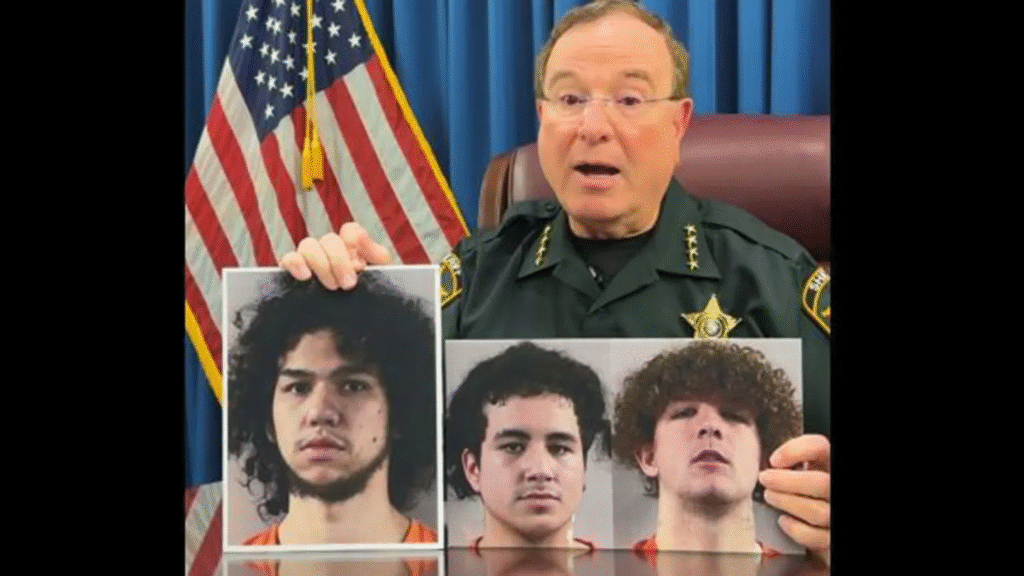
According to Polk County Sheriff Grady Judd, it was around 3 a.m. when 21-year-old McDonald’s employee Yoan Soto found himself at the center of a storm no one could have predicted. Two young men — 19-year-old Peter Story and his 18-year-old friend Nicholas Jones — pulled up to the drive-thru window, hungry and impatient. They’d been told their order couldn’t be taken because the restaurant was “overloaded with online orders.” That explanation didn’t sit well. Within minutes, words turned to shouting, and shouting turned into threats. By the time it was over, a gun had gone off — and the phrase “fast food” had taken on an entirely different meaning.

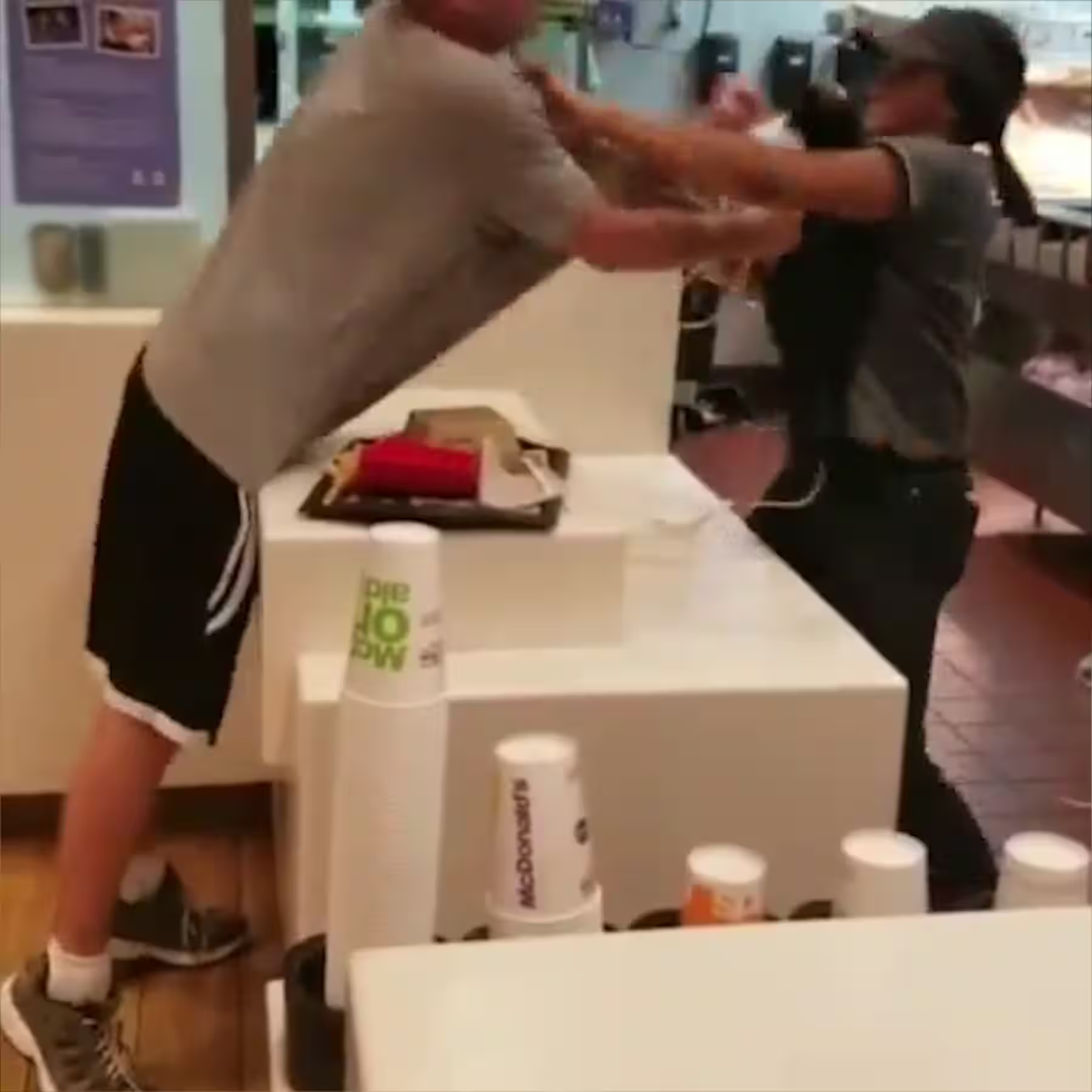
Witnesses say it started with the kind of irritation we’ve all felt before — long lines, slow service, someone saying “sorry, we can’t take any more orders right now.” But what should have been a forgettable inconvenience quickly spiraled into chaos. Deputies say the two customers parked, stormed into the store, and began confronting employees inside. “They were irate,” Sheriff Judd told reporters. “They were threatening the employees, saying they’d wait for them to get off work so they could handle it then.”
That’s when Soto, working the night shift, decided to arm himself. According to the sheriff’s report, Soto produced a handgun as tensions escalated. One of the customers allegedly lunged toward him, trying to grab the weapon. The gun went off, and a single bullet struck Story in the neck. He stumbled backward, bleeding but alive. The shot wasn’t fatal — but the scene that followed was pure pandemonium. Fries scattered across the floor. Workers screamed. Security cameras rolled as customers ducked behind counters.
“It was just a McMess,” Sheriff Judd said bluntly, summing up the night with a term that instantly caught fire online. Social media users flooded comment sections with memes, outrage, and disbelief. Some blamed the customers for “acting entitled.” Others condemned the employee for “bringing a gun to a fryer fight.” Within hours, the phrase “McMess” was trending — a darkly comic shorthand for everything broken about America’s late-night culture of impatience and rage.
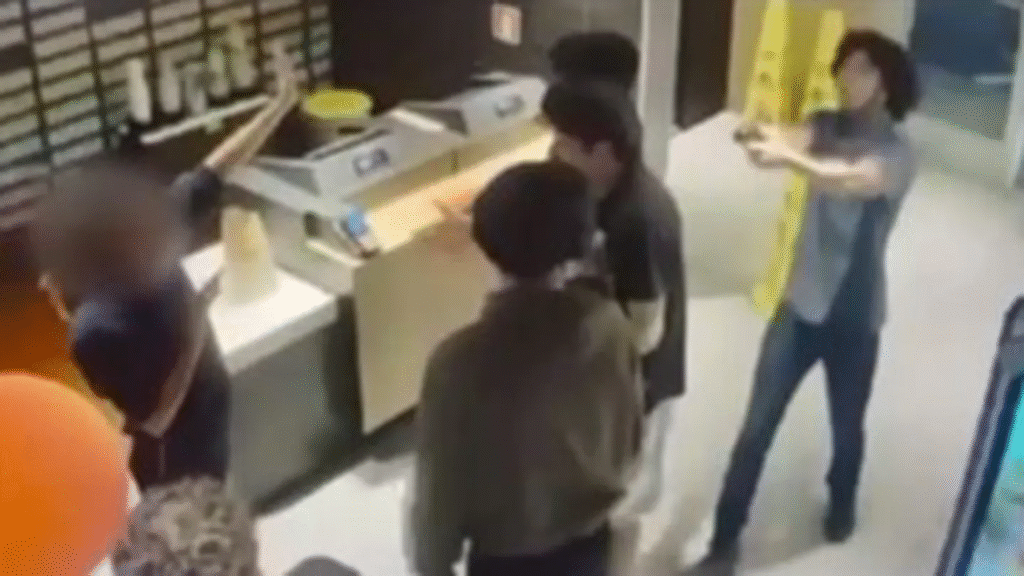
But the deeper you dig, the messier it gets. According to investigators, Soto didn’t stick around after the shooting. Instead, he allegedly picked up the spent shell casing, left the restaurant, and went home — a move that earned him a charge of tampering with evidence. The customers, meanwhile, weren’t treated like innocent victims either. Both Story and Jones were charged with trespassing and disorderly conduct. Nobody walked away clean.
The sheriff, known for his colorful press conferences, didn’t hold back. “You can’t threaten people working behind a counter just because your fries aren’t ready,” he said. “And you sure can’t solve it by pulling a gun.” But then, in a twist that divided opinion, Judd also acknowledged that Soto might have technically been within his rights to defend himself under Florida’s “Stand Your Ground” law — a statute that allows residents to use deadly force if they believe they’re in imminent danger. “The law will sort that part out,” Judd said, “but walking out with the evidence in your pocket? That’s not self-defense. That’s stupidity.”
It was the kind of quote that made headlines for days. Cable news picked it up. Commentators argued over who was to blame. One conservative host quipped, “This is Biden’s America — where even McDonald’s workers need to pack heat just to survive the night shift.” On the other side, liberal commentators blasted the culture of guns and anger that turned a minor customer-service dispute into a shooting. “We’ve normalized insanity,” one columnist wrote. “A man gets shot because a restaurant was too busy. Welcome to the apocalypse, extra pickles included.”
The footage, according to reports, shows exactly how fast it all happened. Story and Jones enter, voices raised. Soto steps back, hand on his hip. Then a blur — an arm reaches, the gun goes off, and everyone scatters. It’s over in seconds. Story clutches his neck, shocked more than hurt, as others rush to help. In the background, a half-finished order flashes on the monitor: “2 Big Macs, 1 large fry, 1 McFlurry.” The absurdity of it all — a literal fight to the death over a frozen dessert — hit America like a punchline no one wanted to laugh at.
But people did laugh. The internet turned it into dark comedy. “When you say extra hot nuggets, this isn’t what we meant,” one post read. Another showed Ronald McDonald holding a Glock with the caption, “Would you like a bullet with that?” The memes spread faster than facts ever could, and within hours, the entire story had become part of America’s fast-food folklore — somewhere between the “Florida Man” headlines and the daily churn of outrage news.
Still, beneath the jokes, there’s a darker truth. The McDonald’s shooting wasn’t an isolated freak event. It’s part of a growing pattern — a wave of violent altercations between customers and service workers across the country. Just in the past year, videos have surfaced of Starbucks baristas being attacked over drink delays, convenience store clerks being assaulted over mask rules, and delivery drivers pulling weapons in road-rage brawls. The pressure cooker of low pay, long hours, and short tempers seems to be boiling over — one order at a time.
Experts call it “rage culture.” Psychologists point to the post-pandemic stress, the decline in patience, and the surge in firearm ownership as a volatile mix. “You have a population that’s more anxious, more armed, and more entitled than ever,” said Dr. Lisa Carmichael, a behavioral analyst who studies workplace aggression. “Combine that with 24-hour access to food and caffeine, and you’ve got a recipe for disaster — literally.”
In Florida, of course, guns are as common as drive-thru windows. Soto reportedly owned his firearm legally, though McDonald’s corporate policy prohibits employees from carrying weapons while on duty. It’s unclear whether he had permission from management or was simply breaking the rule in silence. The restaurant has since declined to comment, citing the ongoing investigation.
Meanwhile, the sheriff’s office says the victim, Story, is recovering and expected to survive. Deputies found him conscious, coherent, and even “remarkably calm” despite the wound. “He’s lucky,” Sheriff Judd said. “An inch in either direction and we’d be talking about a homicide.”
What happened next might be the strangest part. According to arrest reports, Soto went home and hid the shell casing — not the gun itself, just the casing. When detectives arrived, he initially denied tampering but eventually admitted he’d panicked. “He made a bad situation worse,” Judd said. “You shoot someone, you call us. You don’t start cleaning up like it’s a spill in the kitchen.”
By the next morning, the McDonald’s where it all happened was surrounded by crime-scene tape. A yellow “M” glowed faintly in the background as deputies photographed the floor, collected evidence, and tried to piece together the chain of events. Regulars driving by stopped and stared. “It’s crazy,” one local told reporters. “I come here every night after work. You don’t expect gunfire with your McNuggets.”
And yet, as absurd as it sounds, many Americans didn’t seem surprised. “That’s Florida for you,” countless comments read. But the incident hit a nerve beyond state lines — because everyone has been in that line, in that moment, where patience thins and tempers flare. Maybe you didn’t have a gun. Maybe you just slammed the steering wheel. But in 2025, the gap between irritation and violence feels smaller than ever.
The sheriff’s phrase “McMess” wasn’t just a catchy quote — it was a diagnosis. A mess of anger, fear, and misunderstanding. A mess that started with an online order queue and ended with a trip to the ER. A mess that asks, at its core, how far society has drifted from reason. “We’re seeing more people lose control over smaller things,” said criminologist Alan Pierce. “It’s not about food. It’s about frustration — and the idea that everyone thinks they’re the main character in every confrontation.”
The case will now move through the courts. Soto faces potential jail time for tampering with evidence. Story and Jones, the so-called victims, face their own misdemeanors for trespassing and disorderly conduct. In the end, no one wins. The only thing left is a viral story that will live on in hashtags and morning talk shows — one more headline in the endless cycle of outrage.
And that’s what makes it all so uncomfortable. Because for every person shaking their head in disbelief, there’s another secretly nodding in recognition. They know that feeling — the late-night hunger, the slow service, the moment where you think, “This is ridiculous.” Most of us just grumble, roll our eyes, and move on. But in that Florida McDonald’s, three young men forgot the one rule that separates irritation from tragedy: someone has to stay calm.
Instead, the situation fed on itself. Two angry customers convinced they’d been disrespected. One overworked employee convinced he was in danger. Add fear, adrenaline, and a firearm, and suddenly you’ve got a scene fit for prime-time news. A drive-thru becomes a battleground. A Big Mac becomes a bullet point.
Days after the shooting, customers returned to the same restaurant, quietly ordering their usual meals. The drive-thru speaker still crackled with the same greeting: “Welcome to McDonald’s, can I take your order?” But for the people who were there that night, nothing about it will ever sound the same. The echo of that single gunshot still hangs in the air — a reminder of just how thin the line between civility and chaos has become.
The story’s gone global now, shared across continents as both cautionary tale and cultural symbol. In the age of instant gratification, waiting three minutes for a burger feels like eternity — and that’s the real tragedy. Somewhere along the way, the country forgot how to wait, how to de-escalate, how to just let things go. Instead, everything’s personal, everything’s a fight, and everyone’s armed with something — a gun, a phone, an ego.
Maybe the “McMess” wasn’t just about McDonald’s. Maybe it was about all of us — the way we snap at strangers, the way we take everything as an attack, the way we live on edge in a world that never slows down. Sheriff Judd said it best when he shook his head and told reporters, “All this over a hamburger.”
And that’s the punchline no one can laugh at. Because behind the absurdity, the fried grease, and the flashing lights, there’s a question that lingers long after the scene is cleaned up: How many more “McMesses” are waiting to happen — before we realize the problem isn’t the food, it’s the fury?