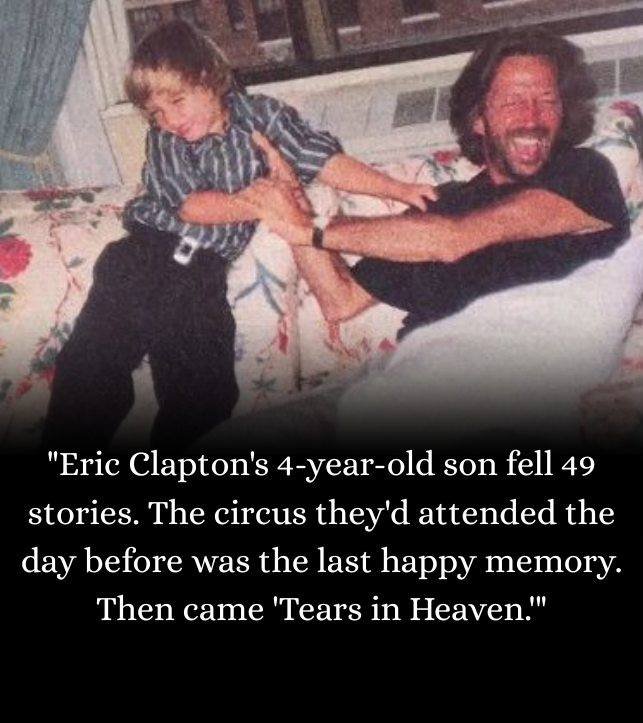
March 20, 1991 remains a dividing line in Eric Clapton’s life — the day when music’s most celebrated guitarist faced a nightmare no parent should ever know. After years battling heroin and alcohol, Clapton had finally achieved sobriety and stability. His son Conor, born in 1986, had reshaped his purpose. Fatherhood softened a man once defined by turmoil. But a morning in New York turned joy into irreversible tragedy, and left a grief the world would soon feel through song.
Clapton had taken Conor to the circus the day before — an ordinary outing filled with the laughter and excitement only a four-year-old can bring. It was one of their happiest days together, a memory Clapton would later describe as pure light. The next morning, plans for a visit to the zoo were shattered when Conor fell from an open window on the 53rd floor of a Manhattan apartment. A moment of innocence, a window left ajar, and a life ended in seconds.
Witnesses recall panic, sirens, and the disbelief of a father arriving moments too late to save his child. For Clapton, this was not a tragedy of headlines — it was the erasure of every future moment he imagined with his son. Birthdays that never came. School days never lived. Quiet mornings and shared laughter lost before they began. There are griefs that hollow the world; this was one. In the silence that followed, even music — his lifelong refuge — fell mute.
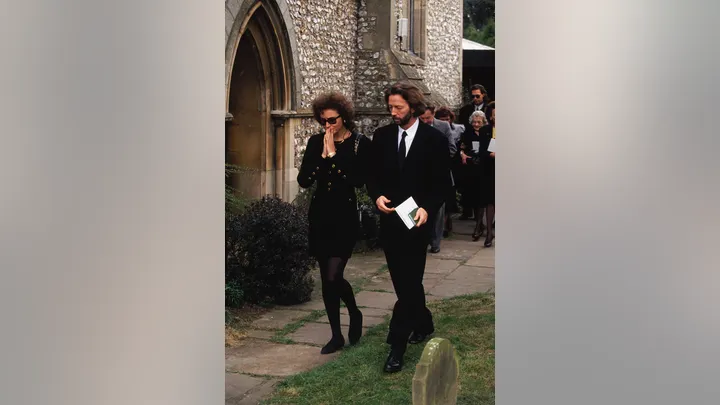
Those close to Clapton say he withdrew not from responsibility, but from the ability to function. A man who once drowned pain in alcohol confronted suffering with no escape, a choice anchored in the sobriety he had fought so hard to build. He did not relapse. He endured. Sobriety was no longer about survival — it became a tribute to Conor. Every day forward would be lived without numbness, because the memory of his son demanded clarity, not self-destruction.
In time, music returned — not as performance, but as language for the unspeakable. With lyricist Will Jennings, Clapton shaped grief into melody. “Tears in Heaven” was not written for applause; it was written as a question whispered into the void. Would his child know him if they met beyond this life? Could love cross the space death had imposed? The vulnerability was raw, the pain unfiltered. It was a father searching, not a superstar composing.
When the song reached the world in 1992, the response was immediate. Millions felt the tremor of his words. The ballad earned three Grammy Awards, but the accolades mattered far less than the connection it forged. Parents who had buried children recognized themselves in his voice. Those familiar with profound loss found language in his lyrics. Clapton’s private devastation had become a universal hymn for those learning to live with absence.
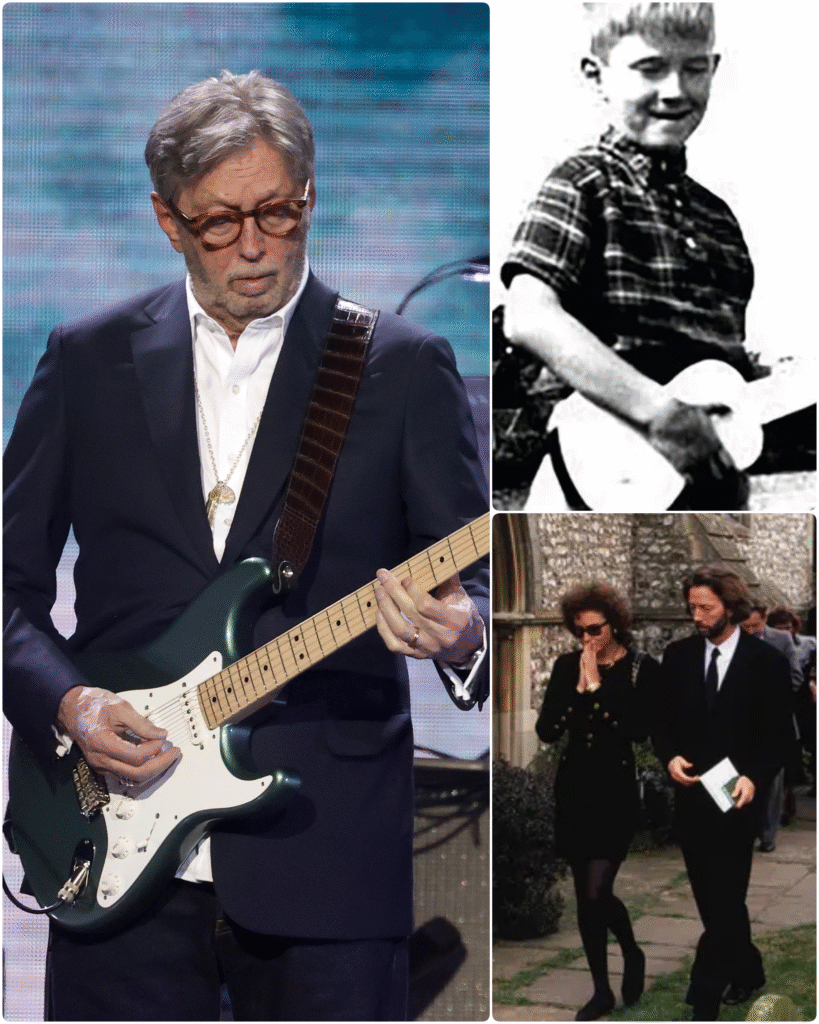
Yet performing the song came at immense personal cost. For years, Clapton stood on stage and reopened the deepest wound a man can carry. Fans heard catharsis; he relived agony. Eventually, he stepped back from the song, explaining that healing meant allowing memory to exist without constant reopening of pain. Grief had not vanished — it had simply changed shape. He chose remembrance over repetition, fatherhood over performance, even long after loss.
The tragedy also reshaped Clapton’s mission. In 1998, he established the Crossroads Centre in Antigua, a rehabilitation facility for those battling addiction. It was a continuation of the vow he made after Conor’s death — to honor his son by helping others fight the demons he once knew intimately. Thousands have found recovery through the center. What began in unimaginable loss became a beacon for those struggling to survive their own darkness.
Today, Clapton rarely speaks publicly about Conor. Time has not erased grief; it has taught him to coexist with it. He remains sober, decades into recovery, and close friends say his son’s memory still guides the quiet choices of his life. When he does reflect, his words carry the depth of a man forever changed — one who loved fiercely, lost painfully, and chose to lift others rather than fall.
For parents who have endured similar pain, Clapton’s story stands as both wound and witness. Grief never ends, but neither does love. Time softens edges, yet the absence of a child remains a permanent shape in the heart. Clapton transformed that weight — not into escape, but into expression, resilience, and a legacy of care beyond the stage. In enduring his loss publicly, he gave others permission to feel theirs privately.
Conor Clapton was just four years old — a boy who laughed at the circus and dreamed of the zoo, unaware of how fragile the world can be. His life was brief, but its impact endures through his father’s music and mission. “Tears in Heaven” is more than a song. It is love carried through grief, a father’s voice calling across silence, and a reminder that even in the heaviest sorrow, choosing life can honor the love that remains.