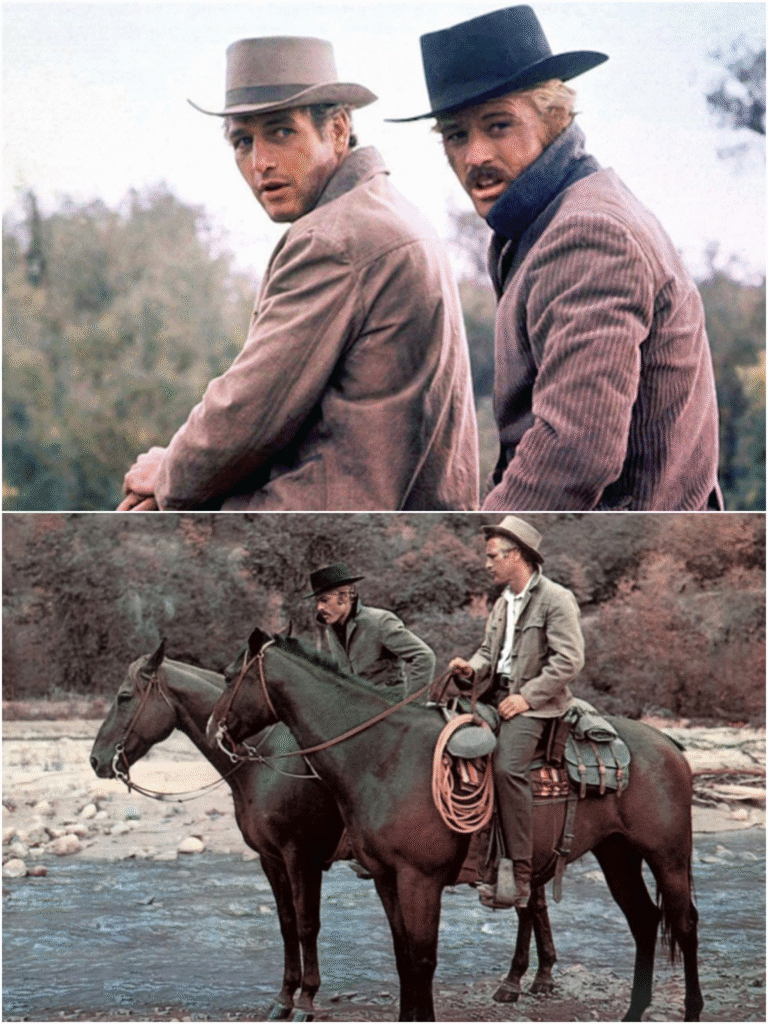
The sun dipped low over the rugged plains, painting the sky in fading gold. In that light rode two men who would never fade — Paul Newman and Robert Redford. They weren’t just outlaws; they were the heartbeat of a dying frontier. Every train they robbed felt like one last dance before the curtain closed.
Butch Cassidy was the thinker — smooth talker, dreamer, and schemer. Sundance was the quiet shadow — the marksman who spoke only through bullets. Together, they formed an unbreakable bond born of danger and trust. They were thieves, yes, but thieves with style, grace, and heart.
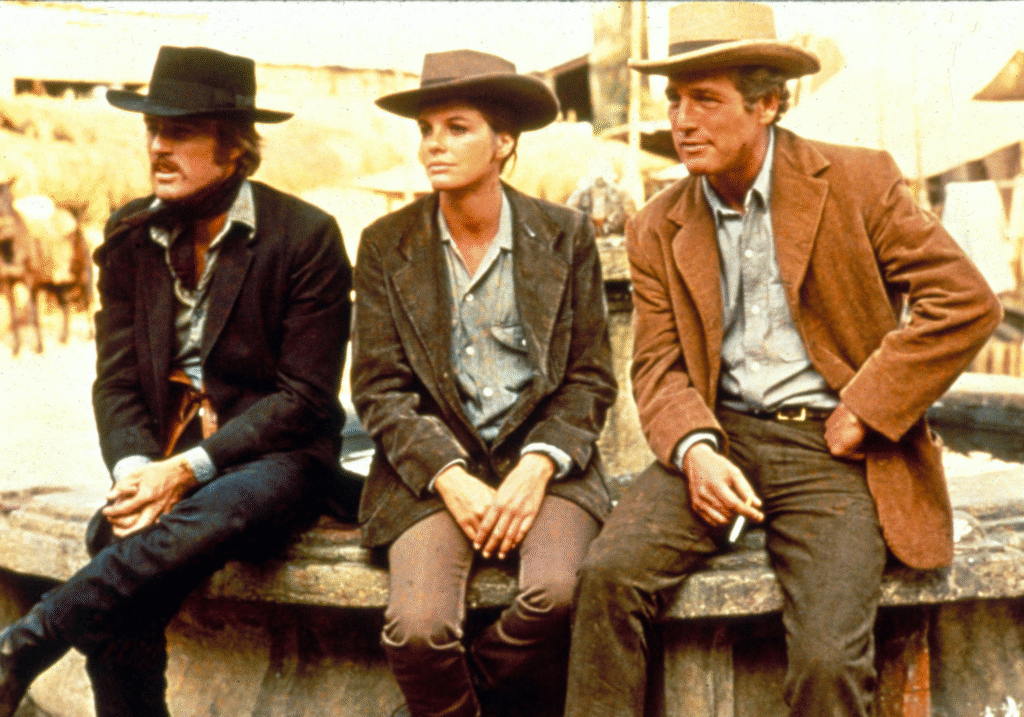
Directed by George Roy Hill, the film redefined the Western genre forever. It replaced grit with charm, blood with laughter, and silence with melody. Audiences didn’t just watch these men — they fell in love with them. Their friendship felt more real than the world trying to tear it apart.
The humor was effortless, the chemistry electric, and the tragedy slow-burning. They weren’t heroes or villains — just men caught between two centuries. Each line of dialogue carried warmth, wit, and melancholy. Their smiles hid the truth: the world no longer had room for them.
When the law closed in, they fled south to Bolivia for one last shot. But no frontier lasts forever, no matter how far you ride. Their outlaw days became numbered, their laughter echoing against fate. They could outrun the law — but not time itself.
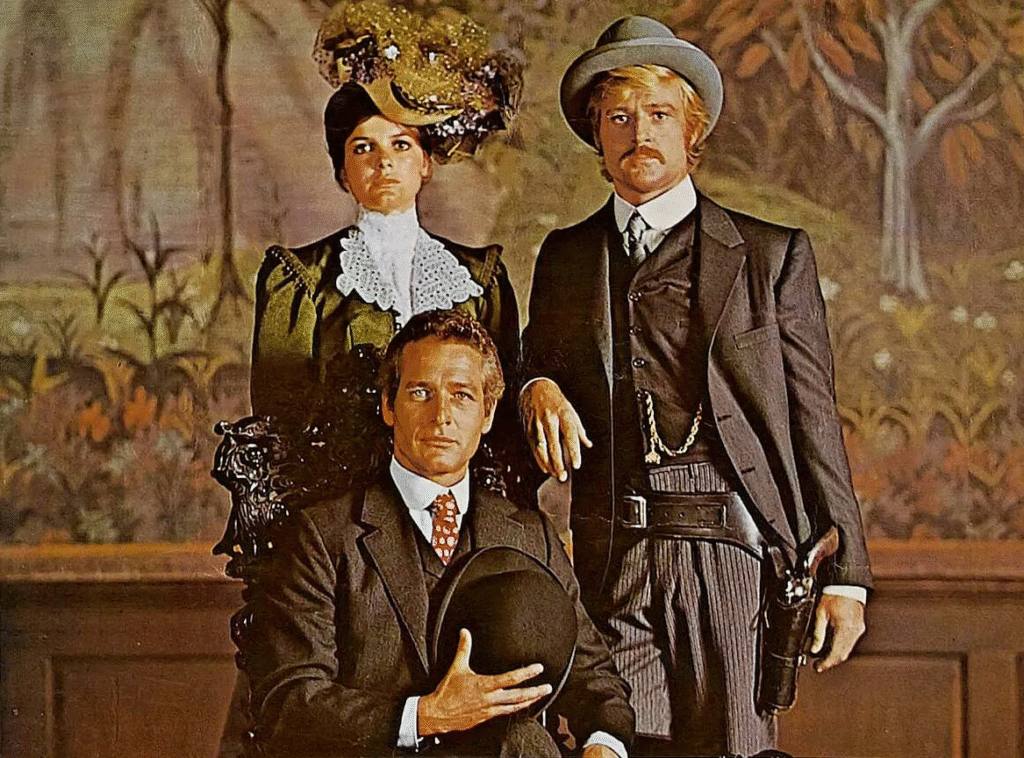
The final scene remains one of Hollywood’s greatest moments. Butch and Sundance burst from cover into a hail of bullets. The screen freezes, locking their courage in eternal defiance. They didn’t die; they became myth — forever young, forever running.
“Raindrops Keep Fallin’ on My Head” plays, light and ironic amid chaos. A song that shouldn’t fit, yet fits perfectly in its contradiction. It made the danger almost tender, the sadness almost sweet. That was the film’s secret — heartbreak disguised as joy.
Winning four Academy Awards, the film became a cinematic milestone. It wasn’t about outlaws anymore — it was about the end of innocence. Critics called it revolutionary, audiences called it unforgettable. It turned the Western into poetry, and rebellion into art.
The partnership between Newman and Redford became the stuff of legend. Their connection was natural — two souls perfectly synced on screen. You could see the trust in their glances, the affection in their jokes. They weren’t just acting friendship; they were living it.
Even decades later, Butch Cassidy and the Sundance Kid still rides high. Its influence echoes in every buddy film and every tragic hero since. It showed that charm could coexist with courage, and loss with laughter. Its outlaws became immortals in the eyes of movie lovers everywhere.
So when we watch them ride into that final blaze, we feel it too. The end of an era, the fading of a golden light, the ache of farewell. It wasn’t just the West that died that day — it was innocence itself. And yet, in that final freeze-frame, they live forever.