Ben Johnson never chased the spotlight — it found him. Long before Hollywood knew his name, he was a quiet boy from the plains of Oklahoma, born in 1918 on the Osage Indian Reservation. With Irish and Cherokee heritage and a rancher’s spirit in his bones, he wasn’t dreaming of cameras or applause. He dreamed of saddles, sunrises, and an honest day’s work. To him, the West wasn’t a myth — it was home.
Johnson’s childhood was shaped not by privilege, but by dirt roads, cattle dust, and the rhythm of the land. His father was a rancher and rodeo champion, a man who taught him early that character mattered more than fame. Johnson’s first lessons weren’t learned in classrooms, but in open fields — patience with horses, respect for nature, and a tough exterior softened only by quiet humility and loyalty.
The path to film wasn’t ambition — it was coincidence. Johnson’s mastery with horses made him invaluable as a wrangler and stuntman for Western productions. He didn’t step into cinema to be seen; he stepped in to work. Studios needed authentic cowboys, and Johnson arrived with real calluses, not costume-store grit. His steady hand and fearlessness around horses earned trust behind the scenes long before any director pointed a camera his way.
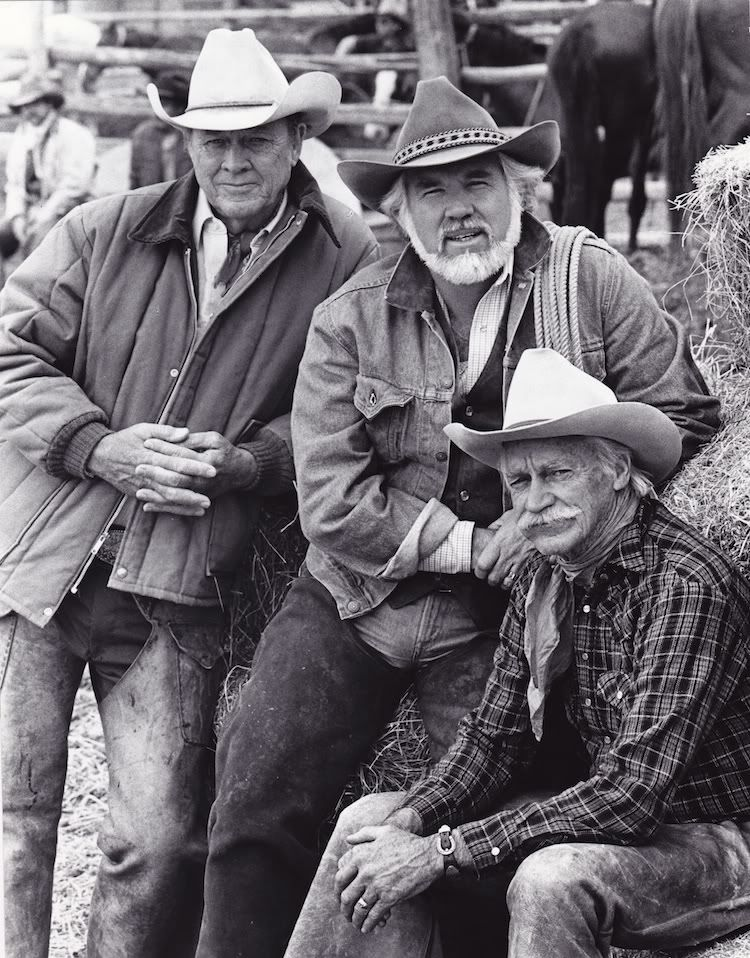
Legendary director John Ford was the one who truly changed Johnson’s life. Ford saw beyond the stoic cowboy exterior — he recognized an authenticity that couldn’t be rehearsed or taught. Ford knew audiences would feel it too. Slowly, the cowboy from Osage found himself moving from the saddle behind the lens to the spotlight in front of it, trading reins for scripts without ever losing the dust on his boots.
From She Wore a Yellow Ribbon to Wagon Master, Johnson brought a grounded elegance to Western cinema. He wasn’t loud, flashy, or dramatic — he was real. When audiences looked at him, they didn’t see an actor portraying the West. They saw the West itself. His performances carried the quiet dignity of a life lived outdoors, shaped by wind, sweat, and honest labor — a stark contrast to Hollywood’s polished illusions.
Then came The Last Picture Show (1971), a role that would etch him permanently into film history. Playing Sam the Lion, Johnson embodied grace, loneliness, and moral strength in a single understated performance. The Academy noticed. In 1972, he accepted the Oscar for Best Supporting Actor. With humility typical of a cowboy who never asked for applause, he offered soft gratitude. It was glory — but it wasn’t his dream.
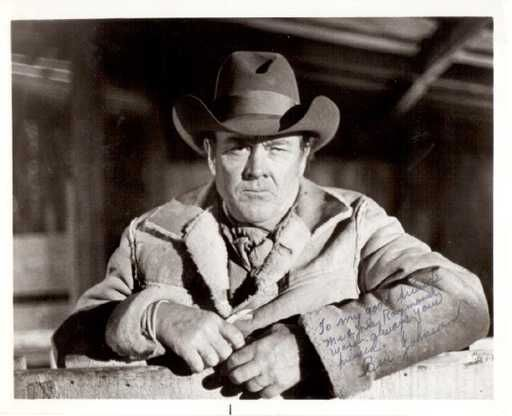
Fame never changed Johnson, because fame was never the finish line. At the height of a blossoming career, in 1953, he stunned Hollywood by stepping away to return to rodeo. Critics saw a risky career move. Cowboys saw something else — honor. That same year, he became World Champion Team Roper. He didn’t need a studio contract to feel proud. Open skies and an honest rope in hand were worth more than a thousand spotlights.
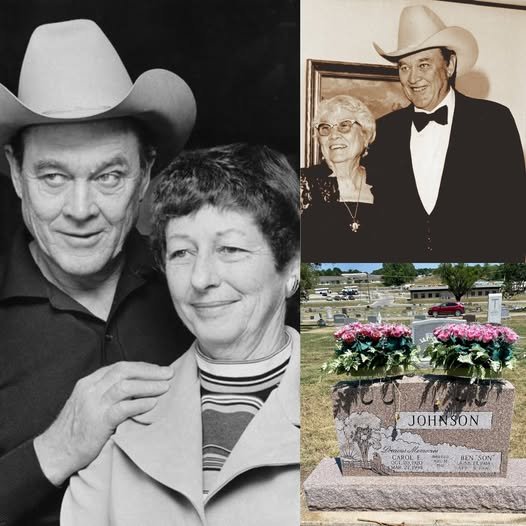
His personal life echoed his values — steady, loyal, private. Johnson married Carol Elaine Jones, daughter of famed horse wrangler “Fat” Jones. Their marriage lasted over fifty years, untouched by scandal or Hollywood’s turbulence. They had no children, but they built a partnership defined by devotion, not headlines. When she passed in 1994, something within Johnson dimmed. Two years later, he followed her, riding into the sunset the same quiet way he lived.
To the end, Johnson stayed true to himself. “I grew up on a ranch,” he once said, “and I know livestock, so I like working in Westerns.” His words weren’t poetic — they were honest, shaped by a life where simplicity held more value than glamour. Johnson believed in doing what he knew, and he knew the West. It wasn’t insecurity — it was wisdom. He avoided failure not by fear, but by authenticity.
The modern world remembers many stars for flash. Ben Johnson is remembered for truth. His legacy is proof that realness doesn’t fade. He didn’t need billboards, scandals, or elaborate mythology. His achievements came wrapped in leather and grit, not glitter. Johnson didn’t just play cowboys — he was one. Every frame he appeared in carried the weight of a life lived outdoors, tethered not to ego but to land, horses, and honor.
And somewhere in America’s cinematic memory, he still rides — hat low, posture steady, eyes on the horizon. Not a star chasing applause, but a cowboy heading home. Because for Ben Johnson, home wasn’t a mansion in Beverly Hills — it was open fields, real dirt, and a horse beneath him. Hollywood gave him an Oscar. The West gave him a soul. In the end, we remember not the trophies, but the man — and the dust rising behind him.