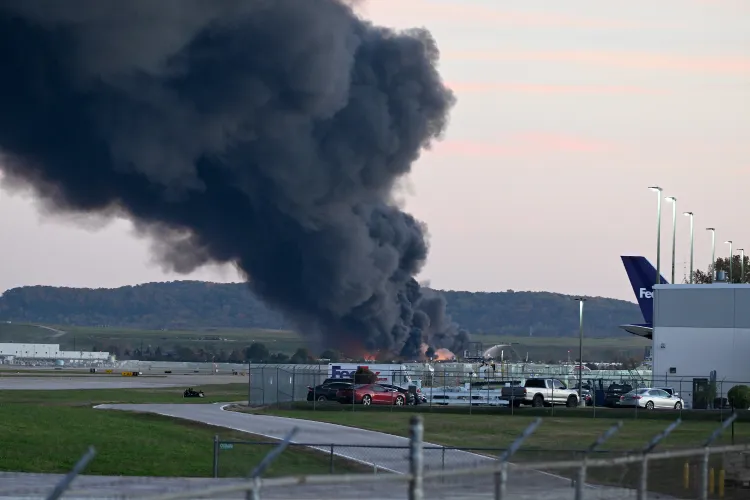
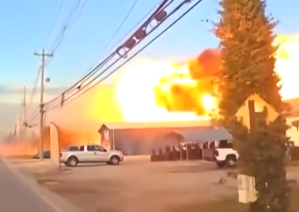
A terrifying dashcam video has emerged showing the exact moment a UPS cargo jet plummeted from the sky and exploded in Louisville, Kentucky, earlier this week — killing 14 people and engulfing two nearby businesses in a massive fireball. The crash sent shockwaves through the aviation world, prompting urgent federal investigations and immediate safety actions.
Witnesses described a “ball of fire falling from the clouds” as the aircraft broke apart mid-air moments after take-off from Louisville Muhammad Ali International Airport. Within seconds, the plane slammed into an industrial park, triggering explosions that ripped through warehouses and sent debris raining down across the area.
Emergency crews rushed to the chaotic scene, battling towering flames and intense heat that could be felt blocks away. Firefighters fought through walls of smoke to pull survivors from burning structures, while nearby residents were evacuated amid fears of further explosions.
Authorities confirmed that all 14 fatalities included the three UPS crew members on board and multiple people working inside the struck businesses. Louisville Mayor Craig Greenberg called it “one of the darkest days our city has faced in years,” praising first responders for their heroism.
The National Transportation Safety Board (NTSB) says the cockpit voice recorder captured warning alarms and a pilot shouting “left engine failure” seconds before the crash. Investigators believe a structural collapse in the left engine pylon caused the catastrophic loss of control.
In an unprecedented move, the Federal Aviation Administration (FAA) ordered all McDonnell Douglas MD-11 aircraft grounded pending inspection. UPS confirmed that about 9% of its global fleet has been sidelined “out of an abundance of caution” as maintenance teams perform urgent safety checks.
UPS issued a statement expressing “profound sorrow” and pledging full cooperation with investigators. The victims — Captain Richard Wartenberg, First Officer Lee Truitt, and Relief Captain Dana Diamond — were remembered by colleagues as highly skilled aviators and “pillars of the UPS flight family.”
At least two local factories were destroyed in the blast. Dozens of workers narrowly escaped as flames consumed metal structures and fuel tanks, forcing power outages across the industrial zone. Louisville’s fire department has declared the area a “hazard zone” while cleanup and recovery continue.
The crash has reignited questions about the continued use of aging MD-11 aircraft, some over three decades old. Aviation experts warn that recurring mechanical failures highlight the urgent need for stricter inspection protocols and potential fleet retirement.
UPS’s massive Louisville air hub, known as Worldport, temporarily halted operations but has since resumed limited service under tight safety monitoring. The company faces growing logistical strain and international scrutiny following the disaster.

As investigators comb through wreckage and flight data, the families of the victims gather at makeshift memorials near the crash site — flowers, photos, and handwritten notes honoring lives lost too soon. The NTSB says its full report could take months, but for now, the message is clear: every second counts when safety fails at 30,000 feet.
A terrifying dashcam video has emerged showing the exact moment a UPS cargo jet plummeted from the sky and exploded in Louisville, Kentucky, earlier this week — killing 14 people and engulfing two nearby businesses in a massive fireball. The crash sent shockwaves through the aviation world, prompting urgent federal investigations and immediate safety actions.
Witnesses described a “ball of fire falling from the clouds” as the aircraft broke apart mid-air moments after take-off from Louisville Muhammad Ali International Airport. Within seconds, the plane slammed into an industrial park, triggering explosions that ripped through warehouses and sent debris raining down across the area.
Emergency crews rushed to the chaotic scene, battling towering flames and intense heat that could be felt blocks away. Firefighters fought through walls of smoke to pull survivors from burning structures, while nearby residents were evacuated amid fears of further explosions.
Authorities confirmed that all 14 fatalities included the three UPS crew members on board and multiple people working inside the struck businesses. Louisville Mayor Craig Greenberg called it “one of the darkest days our city has faced in years,” praising first responders for their heroism.
The National Transportation Safety Board (NTSB) says the cockpit voice recorder captured warning alarms and a pilot shouting “left engine failure” seconds before the crash. Investigators believe a structural collapse in the left engine pylon caused the catastrophic loss of control.
In an unprecedented move, the Federal Aviation Administration (FAA) ordered all McDonnell Douglas MD-11 aircraft grounded pending inspection. UPS confirmed that about 9% of its global fleet has been sidelined “out of an abundance of caution” as maintenance teams perform urgent safety checks.
UPS issued a statement expressing “profound sorrow” and pledging full cooperation with investigators. The victims — Captain Richard Wartenberg, First Officer Lee Truitt, and Relief Captain Dana Diamond — were remembered by colleagues as highly skilled aviators and “pillars of the UPS flight family.”
At least two local factories were destroyed in the blast. Dozens of workers narrowly escaped as flames consumed metal structures and fuel tanks, forcing power outages across the industrial zone. Louisville’s fire department has declared the area a “hazard zone” while cleanup and recovery continue.
The crash has reignited questions about the continued use of aging MD-11 aircraft, some over three decades old. Aviation experts warn that recurring mechanical failures highlight the urgent need for stricter inspection protocols and potential fleet retirement.
UPS’s massive Louisville air hub, known as Worldport, temporarily halted operations but has since resumed limited service under tight safety monitoring. The company faces growing logistical strain and international scrutiny following the disaster.
As investigators comb through wreckage and flight data, the families of the victims gather at makeshift memorials near the crash site — flowers, photos, and handwritten notes honoring lives lost too soon. The NTSB says its full report could take months, but for now, the message is clear: every second counts when safety fails at 30,000 feet.