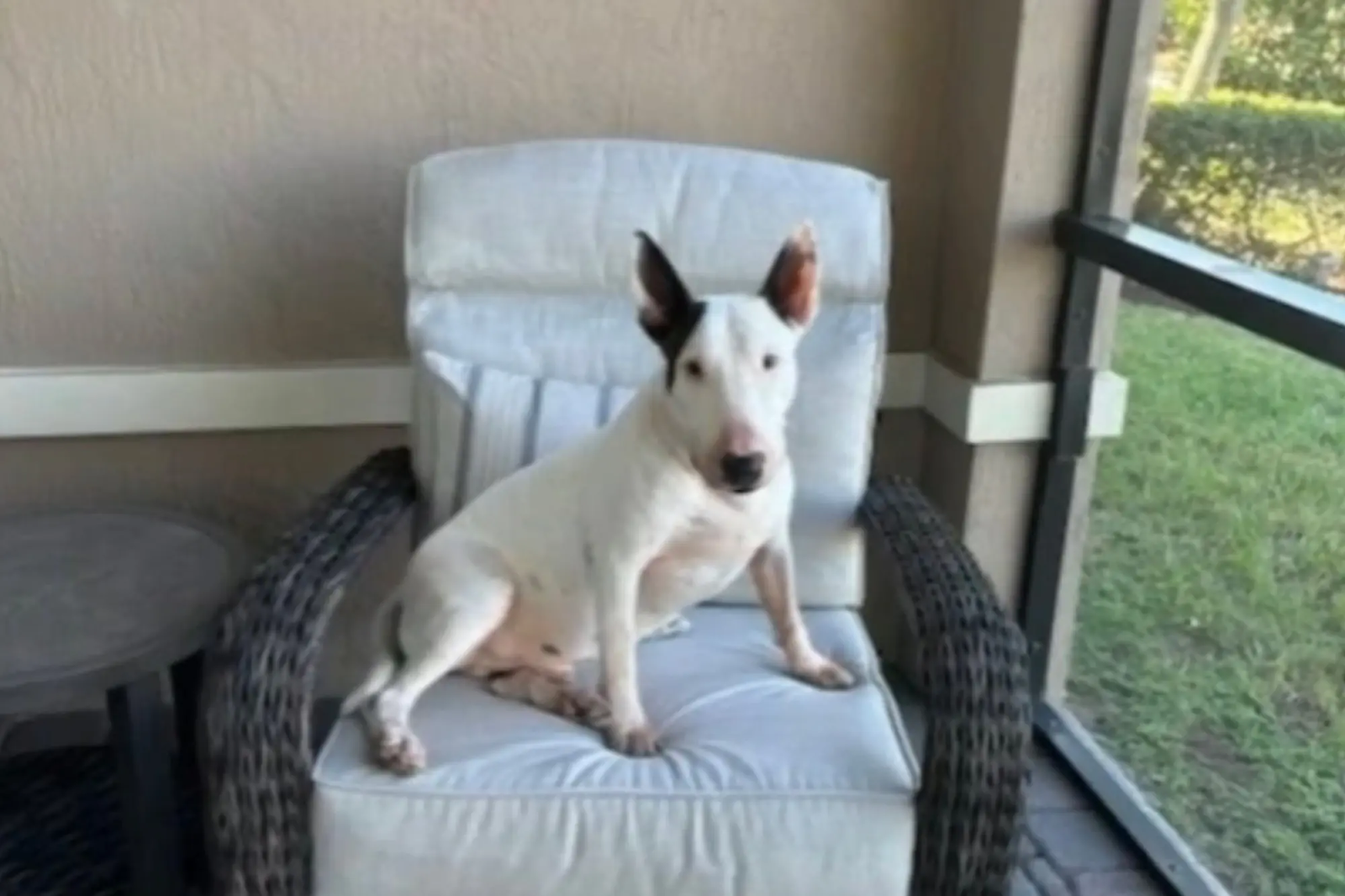
When the hurricane sirens screamed across the Florida coast, the world seemed to stop breathing. Families ran for cover, roads clogged with desperate cars, and the air carried that terrible metallic taste of fear. But when the winds finally died and the cameras rolled in, the rescuers didn’t just find fallen trees and broken homes. They found ropes. Chains. And dogs — trembling, soaked, tied to fences — left behind by the people they trusted most.
It’s a sight too many rescue workers know by heart: a trembling animal, eyes wide with panic, still waiting for the hand that will never come back. In the chaos of natural disasters, stories like these rise up like ghosts from the wreckage — and they never stop haunting us. Every storm brings another debate, another courtroom, another online war between outrage and excuses. And every time, one question echoes louder than thunder: How could anyone do that?
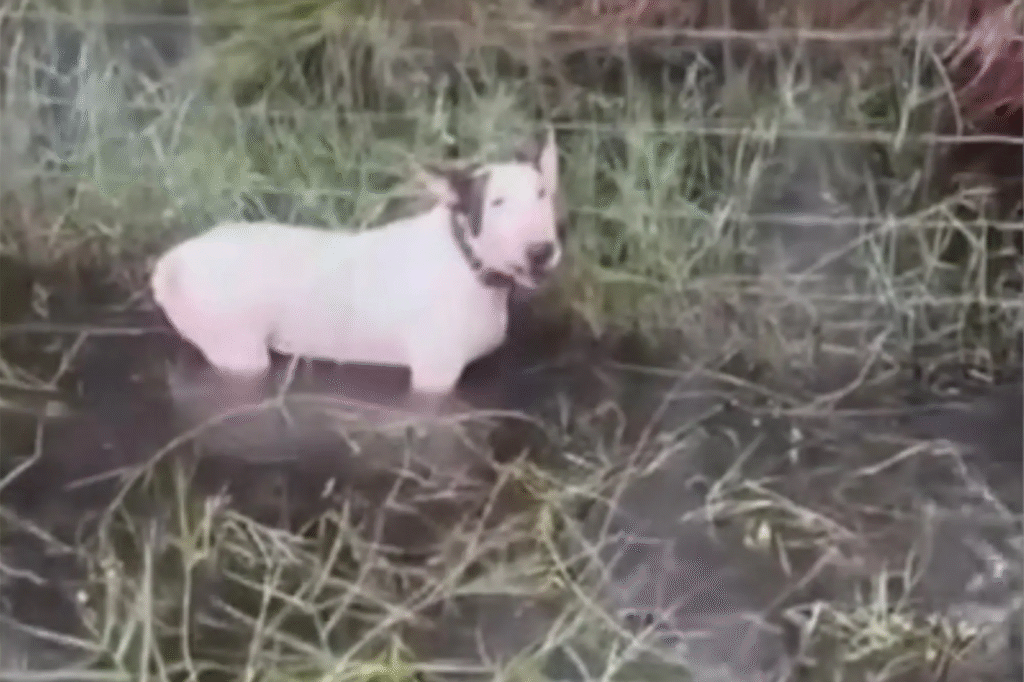
But behind that outrage hides a darker truth — one that’s far more uncomfortable to face. Because sometimes, the people who leave their pets behind don’t see themselves as cruel. They see themselves as victims too.
In the hours before a hurricane strikes, chaos takes over logic. Shelters fill up. Hotels close their doors to pets. Evacuation routes stretch for miles under sheets of rain. Some people panic. Some freeze. And some, tragically, convince themselves that tying a dog to a porch or leaving a cat in a bathroom with a bowl of water is a form of love — a desperate compromise in the face of something uncontrollable.
But the storm doesn’t care about excuses. It rips through everything — and then the internet does the rest.
When photos of abandoned pets begin to circulate, the world responds with fury. “How could they?” “I hope they rot in jail.” “I’d rescue that dog myself.” The outrage feels righteous — and in many ways, it is. No animal deserves to face a hurricane alone, chained and terrified. But each viral post also becomes a reflection of something deeper — our own fragile need to believe that we would never do the same.
That’s why these stories explode online. They’re not just about cruelty — they’re about morality, fear, and the illusion of control. We want villains to point at, heroes to cheer for, and victims to cry over. And nothing embodies that triangle more vividly than an animal left behind in a storm.
But talk to any first responder and they’ll tell you the story no one wants to share. The family who begged for shelter but couldn’t bring their dog because no local facility would take pets. The elderly couple who thought the storm would pass quickly, who returned to find tragedy waiting. The frightened teenager who tied her dog to a pole because she was told evacuation buses wouldn’t allow animals. Are these monsters — or victims of a broken system?
Because America, for all its wealth and pride, still hasn’t solved one of the simplest moral questions of any disaster: what happens to the animals?
For every heroic rescue, there’s a failure — a system that didn’t prepare, a rule that valued property over compassion. In some counties, there are only a handful of pet-friendly shelters for tens of thousands of residents. In others, storm warnings arrive so late that evacuation becomes a lottery. And when the choice is between saving your children or your pets, the human heart splits in two. The storm doesn’t just destroy houses — it destroys moral clarity.
Yet society rarely forgives what happens next. A video surfaces. A neighbor records. A rescuer posts. Suddenly, a stranger’s worst day becomes the world’s entertainment. There’s judgment, ridicule, and calls for punishment — sometimes before the facts are even known. Because outrage travels faster than truth.
Still, maybe outrage is what keeps us honest. Because for every unfair accusation, there’s a genuine monster out there — someone who ties a dog up, walks away, and doesn’t look back. And that person deserves every ounce of society’s wrath. Those are the people whose actions turn hurricanes into crime scenes, and whose indifference breaks something sacred between humans and animals.
Veterinarians and rescue groups say it happens every storm season. They find animals with rope burns on their necks, cats drowned in basements, horses trapped in barns that owners never opened. The aftermath looks like a battlefield. And while authorities struggle to balance empathy with justice, the public rarely accepts nuance. To most people, abandoning an animal — no matter the reason — feels like a betrayal beyond redemption.
That’s the paradox of the modern age: we scroll past human tragedies, but an animal’s suffering can still make us stop. A single photo of a drenched puppy chained to a fence can outshine a thousand statistics about climate damage. Because animals can’t explain or justify — they can only endure. And that silence hits harder than any headline.
The debate over punishment is endless. Should those who abandon pets in disasters face jail time? Community service? Bans on ownership? Or should we recognize that prevention — education, infrastructure, empathy — might do more good than vengeance ever could?
Animal rights advocates argue that punishment must be severe to deter neglect. “If you wouldn’t leave a child behind, why leave a dog?” one Florida rescue worker said. “They depend on us completely.” But critics counter that the law shouldn’t be driven by social media fury. They warn that emotional outrage often overshadows the complexity of survival. “People panic,” one emergency coordinator explained. “They don’t think rationally. They make terrible decisions. Punishing them afterward might not change that.”
Maybe both sides are right. Maybe what we really need isn’t harsher sentences — but a culture that sees animals as part of the evacuation plan, not an afterthought.
That means pet-friendly shelters in every county. Emergency education campaigns that include animal care. Laws that make it as easy to rescue a pet as it is to grab bottled water. Because until those things happen, the moral storms will rage long after the hurricanes pass.
But this isn’t just a Florida problem. It’s a global one. From wildfires in California to floods in Asia, the same haunting images appear — animals clinging to rooftops, eyes filled with confusion, waiting for a hand that might never come. We can measure wind speeds and rainfall, but we still can’t measure the cost of human fear on the innocent.
Social media magnifies everything. The internet doesn’t forget. A single image can turn a neighborhood tragedy into an international debate in hours. Strangers argue across continents, hashtags emerge, politicians tweet condolences. But behind all the noise, one small creature waits for rescue — silent proof that empathy is only as good as what we do with it.
There’s a lesson buried in every storm. Not just about weather patterns or disaster readiness, but about us — who we become when everything falls apart. The storms strip away comfort, routine, and excuses, leaving only character. And sometimes, what they reveal isn’t flattering.
Because compassion isn’t measured by what we post, but by what we protect when no one’s watching.
Every hurricane season, shelters across the country brace for the next wave — not just of animals, but of heartbreak. They reopen their doors, clean the cages, and prepare to comfort the ones left behind. Volunteers work through sleepless nights, coaxing traumatized dogs out of corners, whispering soft promises that not every human will leave them again. It’s slow, painful work. But it’s the only thing that keeps hope alive.
And then, when the skies clear, the headlines fade. The outrage cools. The public moves on. But the animals remember. They always remember.
There’s a saying among rescuers: “You can’t stop the storm, but you can decide who you are in it.” Maybe that’s what this conversation is really about. Not laws, or blame, or viral photos — but identity. What kind of people are we when everything is on the line?
In the end, hurricanes will always come. Floods will rise, winds will howl, and chaos will test us again. But how we treat the voiceless in those moments — that’s what defines civilization.
We like to think storms bring out the best in humanity. Maybe that’s true. But they also expose the cracks — the places where empathy falters and fear wins.
If we’re brave enough to face that truth, maybe the next time the sirens sound, we won’t just run for our lives. We’ll reach for the leash, too.
Because the measure of mercy isn’t how we survive the storm — it’s who we save along the way.