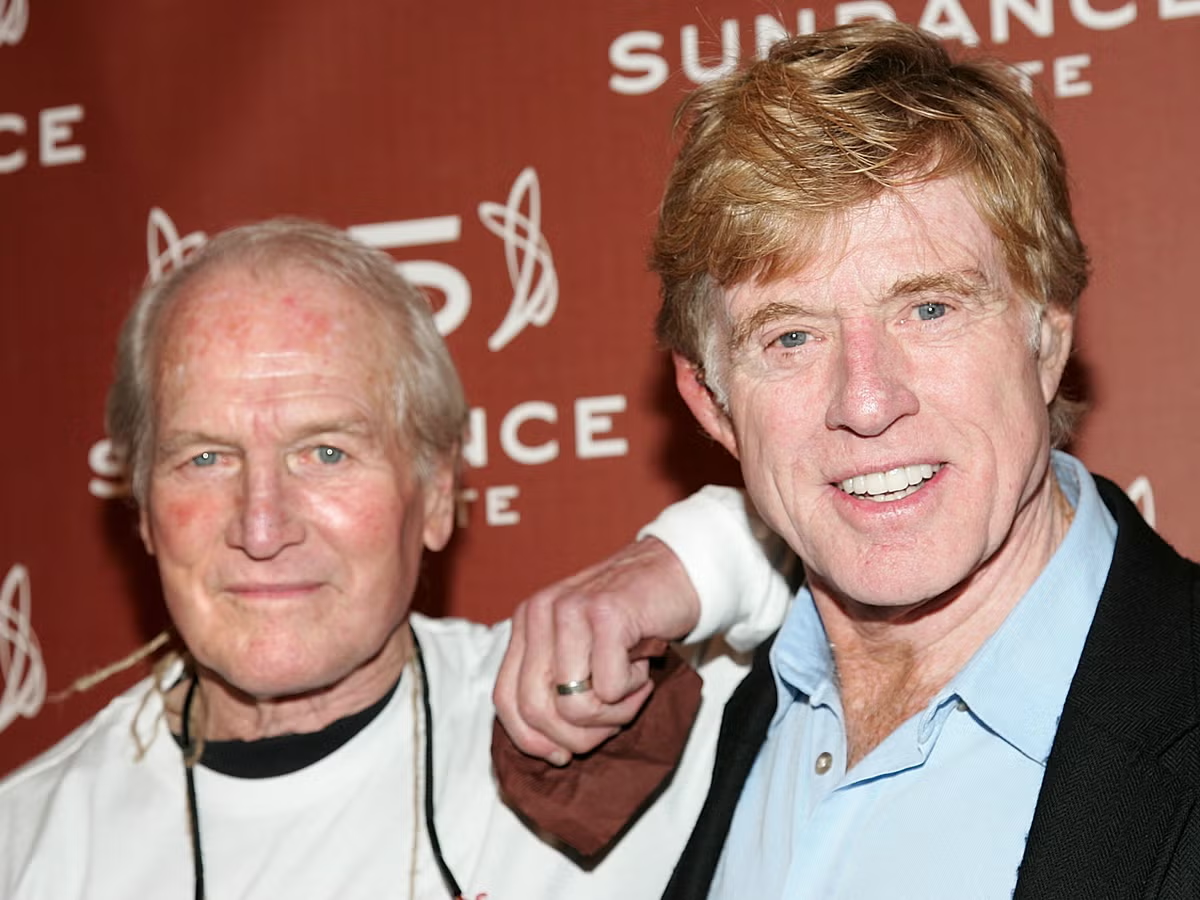
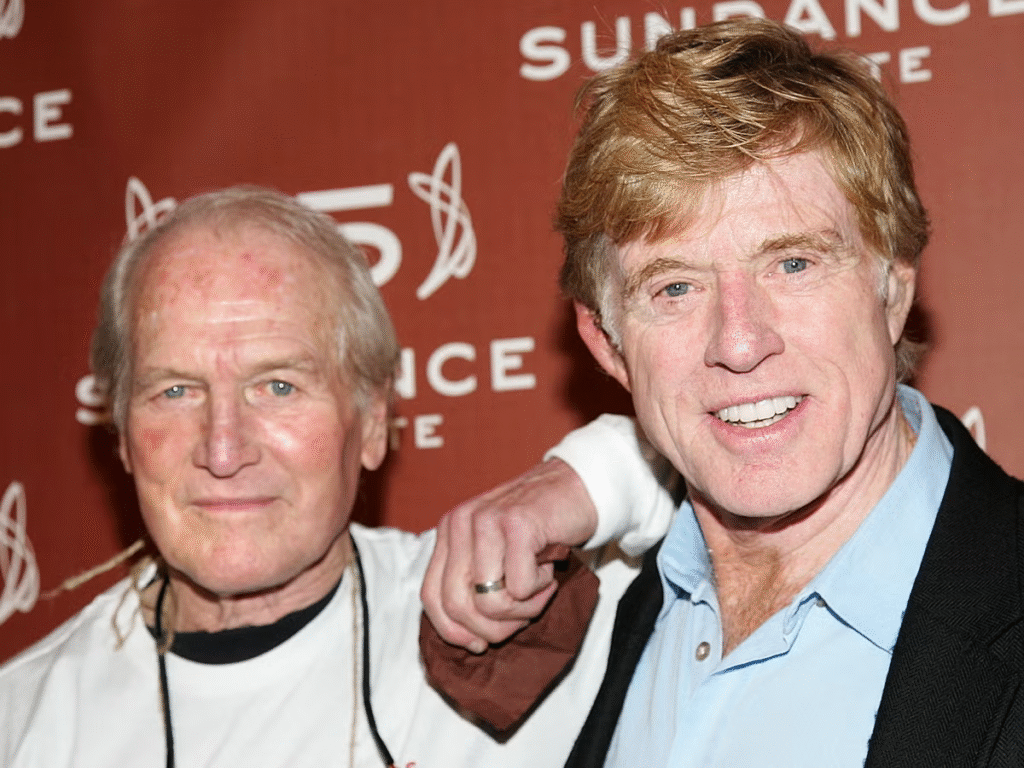
There are cinematic partnerships — and then there are legends. Robert Redford and Paul Newman were not simply co-stars; they were a benchmark of charisma, talent, and effortless cool that Hollywood has spent decades trying to recreate. Whenever these two icons shared the screen, it felt less like acting and more like lightning striking twice — a rare magic, born of mutual respect and a quiet understanding shared only by giants.
Their story begins long before the cameras rolled, in quiet conversations, exchanged looks, and a shared rebellious spirit. Newman, already a Hollywood heavyweight with piercing blue eyes and a moral compass anchored in activism, met a younger Redford still carving his path, equally thoughtful, equally stubborn about integrity in storytelling. Their bond was less about ego and more about vision — a trust that allowed them to challenge each other without ever competing.
In Butch Cassidy and the Sundance Kid, they didn’t just play outlaws; they rewrote the definition of on-screen chemistry. Redford’s Sundance — laconic, razor-sharp, unpredictable — danced perfectly with Newman’s warm, wily Butch. The film’s humor, danger, and aching melancholy were elevated by something unteachable: two men so in sync that silence between them spoke louder than dialogue. Audiences didn’t watch these characters — they believed in them.
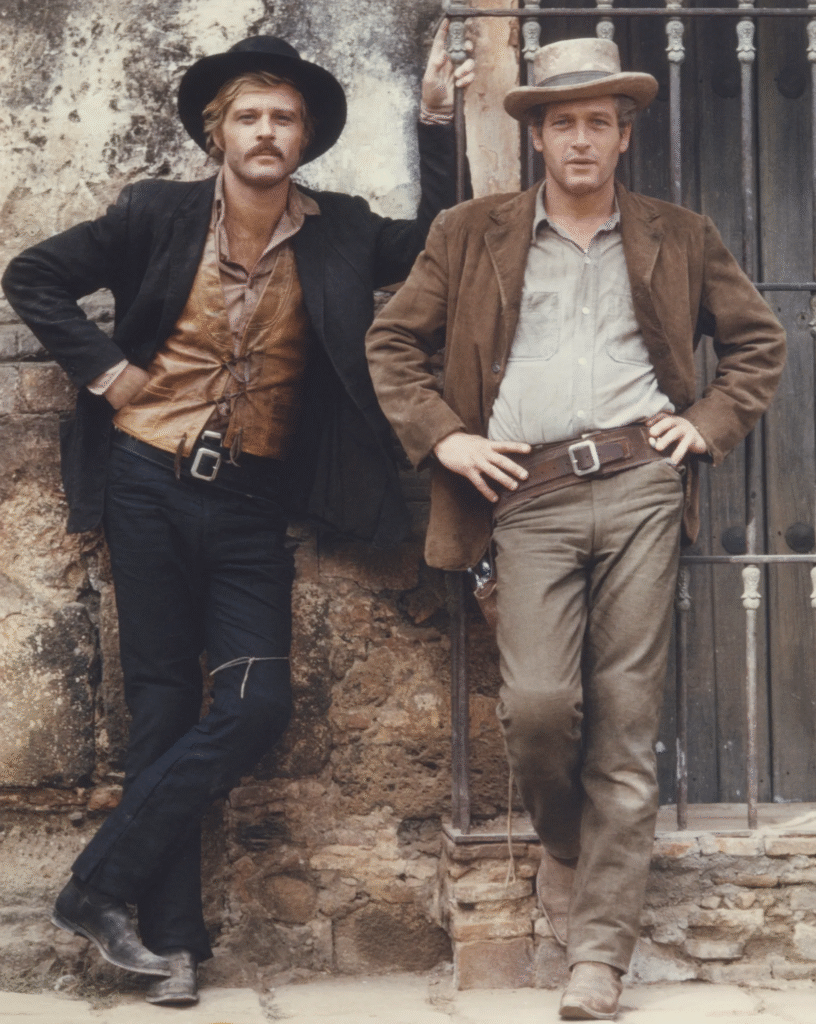
Then came The Sting, a film of twists, swagger, and a polish only matched by the effortless partnership of its leads. Once again, they captivated the world not by force, but by charm so natural it felt unavoidable. Their dynamic — playful, conspiratorial, and anchored in unspoken loyalty — made con artistry glamorous and intelligence irresistible. Hollywood took note; stars shine bright, but constellations endure.
Off-screen, they carried the same integrity. Newman, passionate about philanthropy, poured his soul into causes larger than Hollywood, ultimately donating hundreds of millions through Newman’s Own. Redford, equally reflective and purposeful, built the Sundance legacy — nurturing independent film, amplifying unheard voices, reshaping American cinema with quiet determination. Their missions differed, but their hearts aligned: success was a privilege meant to serve others.
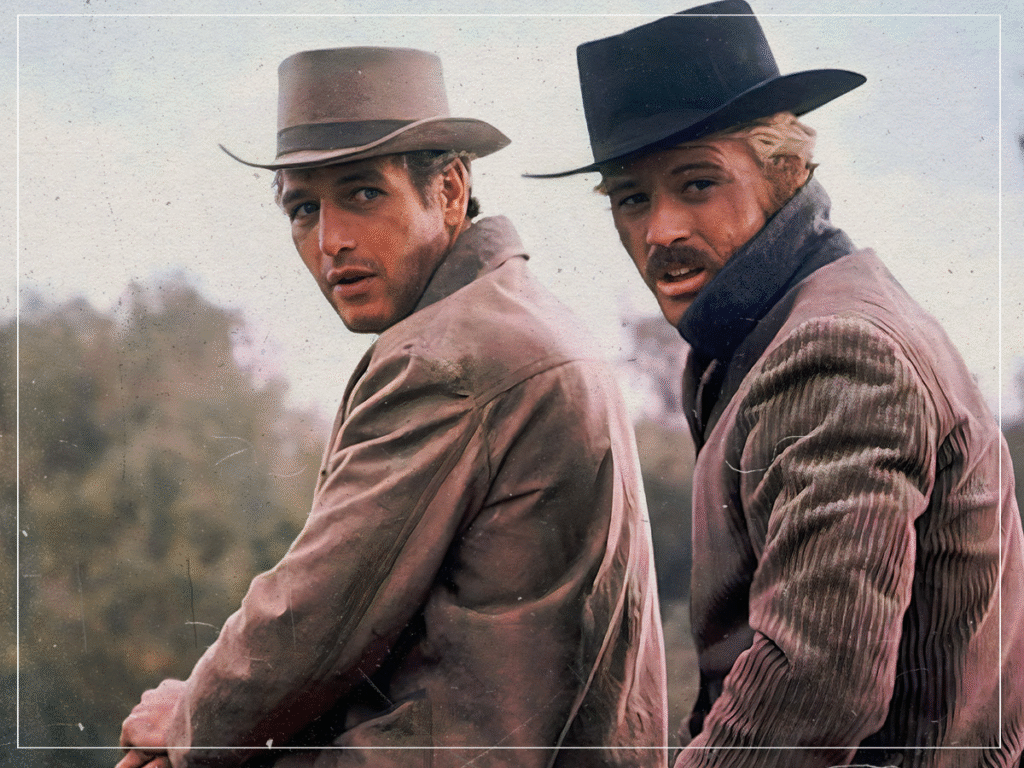
What made their partnership immortal was not perfection, but humanity. They laughed freely, avoided gossip, and respected the craft too deeply to cheapen it with celebrity theatrics. In interviews, their teasing had warmth; their praise, sincerity. They embodied a rare kind of masculinity — confident, compassionate, unthreatened by emotion, unafraid to be vulnerable. Hollywood may celebrate heroes, but these men lived the role.
Newman’s passing in 2008 left a visible ache in Redford — a grief worn not as drama, but as quiet reverence. “I lost a real friend,” he said simply, voice steady but weighted. No headlines, no spectacle; just truth. In those few words, the world saw something deeper than stardom: brotherhood, plain and enduring. Some partnerships are written by studios; this one was written by fate.
And now, with Redford’s own departure in 2025, that story feels complete. Two icons, two rebels with purpose, leaving behind more than performances — leaving a roadmap for grace, loyalty, and craft in an industry that often forgets those virtues. They changed film, yes — but more importantly, they changed expectations of what greatness should look like: humble, generous, curious, human.
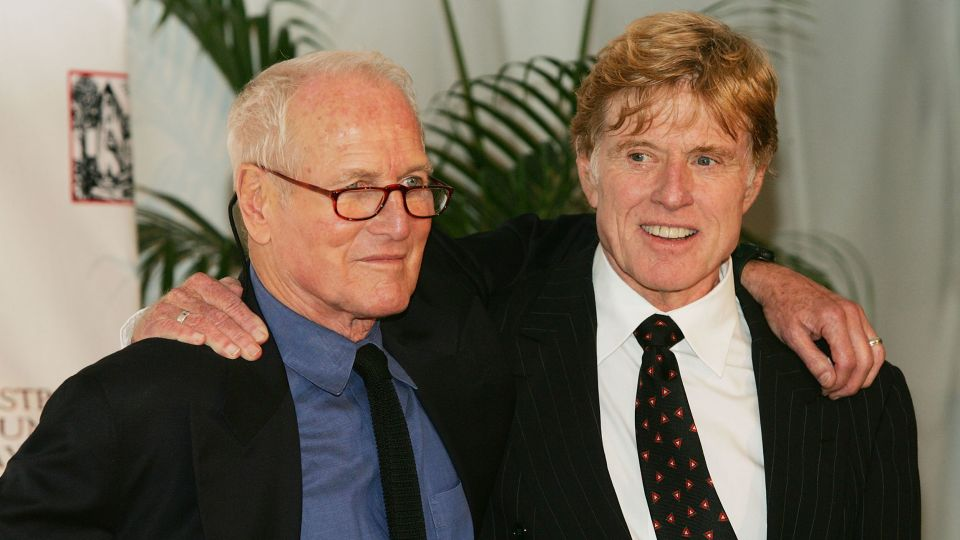
Together, they helped define a golden era — not through spectacle, but through soul. When they rode into the sunset as Butch and Sundance, it was cinematic mythmaking. Today, those shadows stretch from celluloid into memory, reminding us that legends don’t vanish; they echo. Their art remains, their influence ripples, their friendship stands as one of Hollywood’s most cherished tales.
There will always be new stars, new pairings, new promises. But there will never be another duo quite like them. Newman’s spark and Redford’s quiet fire — different flames, same brilliance. Their legacy is not nostalgia; it is proof that authenticity endures longer than applause. They taught us that good men do not fade — they simply pass their light forward.
And now, in the imagination of those who loved them, they ride again — two friends, two legends, sharing one last laugh somewhere past the horizon. Not gone. Just together again, where the story never ends, and where the world always needs heroes who were human first.