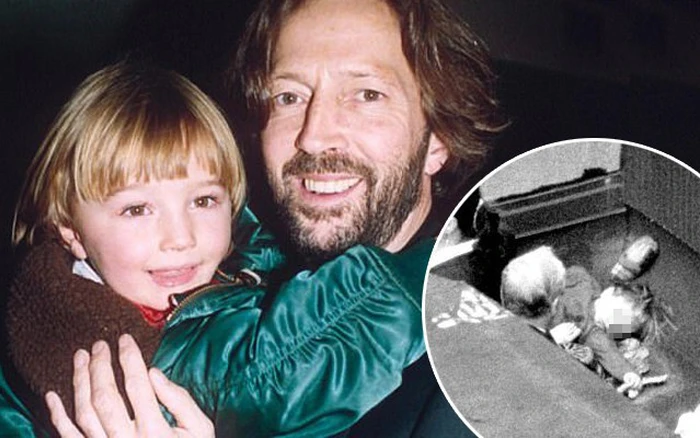
In 1991, the world of Eric Clapton — one of music’s greatest legends — was torn apart by unimaginable loss. His 4-year-old son, Conor, fell from a 53rd-floor window in New York City, an accident so cruel that even words seemed powerless against it. In that instant, the rhythm of his life stopped.
“I remember the room, the phone call, and then nothing. Just silence,” Clapton later said. That silence became his reality for months. He vanished from the public eye, walking the streets alone, hollowed by grief. Friends described him as a man “living in the shadow of an echo.”
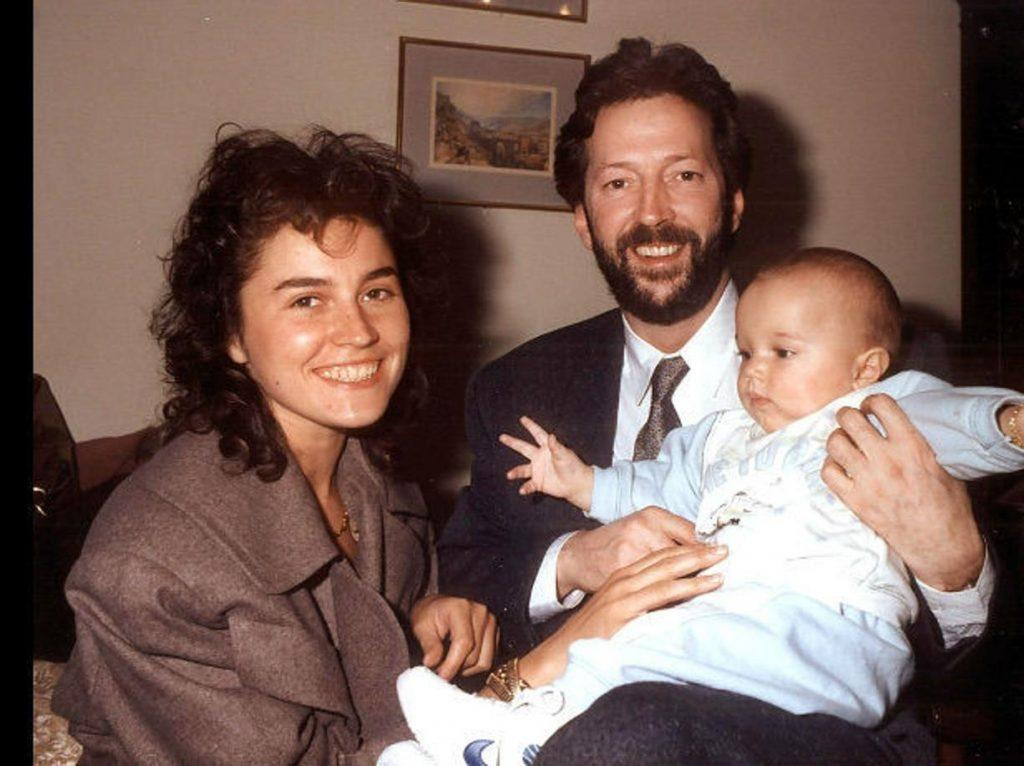
The world knew Clapton as a master guitarist — but now, the music was gone. Each string felt like an open wound, each chord a reminder of a laughter that would never return. “There’s no greater pain,” he admitted quietly. “You just survive minute by minute.”
Then, one night, the music found him again. Softly. Hesitantly. The melody began like a whisper in the dark — not meant for the world, but for one soul. It became “Tears in Heaven.” Clapton didn’t write it as a song; he wrote it as a prayer. “I had to make sense of something that made no sense,” he said.
The lyrics — raw, trembling, pure — carried everything he couldn’t say aloud. “Would you know my name, if I saw you in heaven?” he sang, his voice breaking under the weight of love and loss. It was not a performance; it was confession.
When he played the song live for the first time, the audience sat in reverent silence. No applause. Just quiet tears. “Tears in Heaven” wasn’t entertainment — it was mourning set to melody. It was a father’s soul speaking directly to his son.
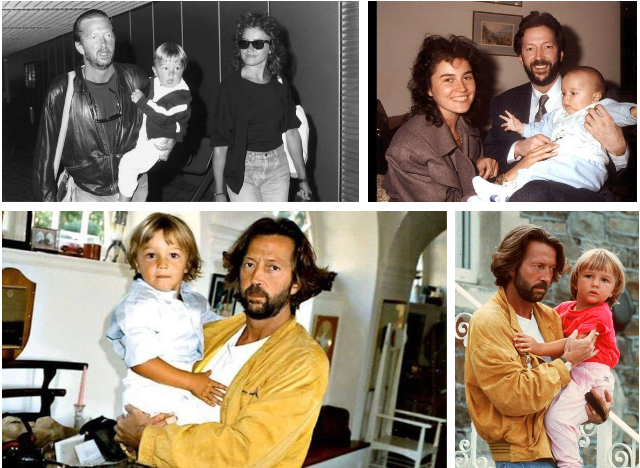
Clapton would later reflect that the song had taken on a life beyond his own grief. “I never thought it would bring comfort,” he said. “But maybe Conor’s life had a meaning I couldn’t see then. Maybe this was part of it.”
For millions who have faced loss, “Tears in Heaven” became a companion in sorrow — proof that even from the darkest pain, something achingly beautiful can still emerge. Clapton’s tragedy became his testament: that love, once born, never truly dies.
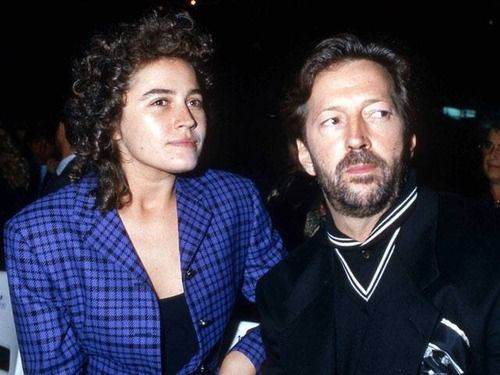
More than three decades later, “Tears in Heaven” endures — not as a chart-topping hit, but as a timeless elegy. A father’s eternal whisper into the sky. A song that reminds us that even through tears, heaven still listens.