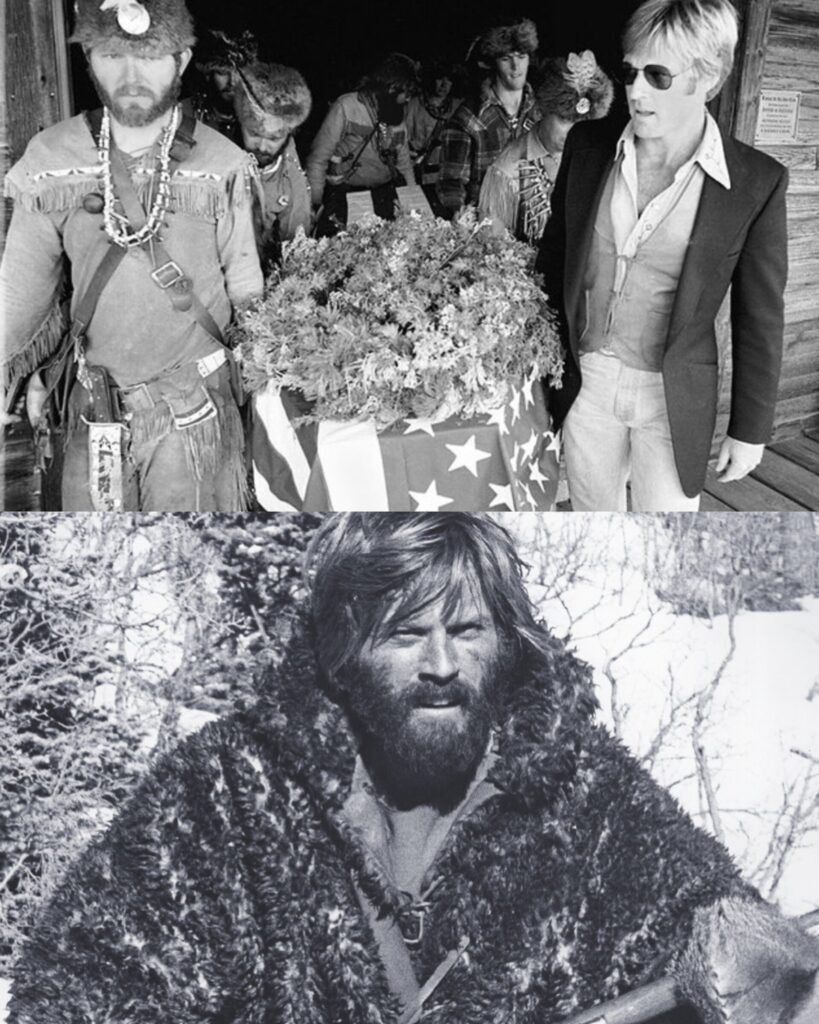
When Robert Redford carried the casket of John “Liver-Eating” Johnston in 1974, it became a haunting image of two legends meeting across time — one born of frontier fire, the other shaped by Hollywood light. That day in Cody, Wyoming, the line between myth and man blurred. Redford wasn’t there as a movie star; he was there as a storyteller, closing the circle on a life that had inspired one of his most enduring roles.
John “Liver-Eating” Johnston’s story began long before cameras or fame. Born John Garrison in 1824, he was a mountain man whose reputation for vengeance made him both feared and admired. After his Native American wife was murdered by the Crow, he allegedly waged a one-man war that turned him into legend. Whether myth or history, Johnston became the living embodiment of the raw, unforgiving spirit of the American frontier.
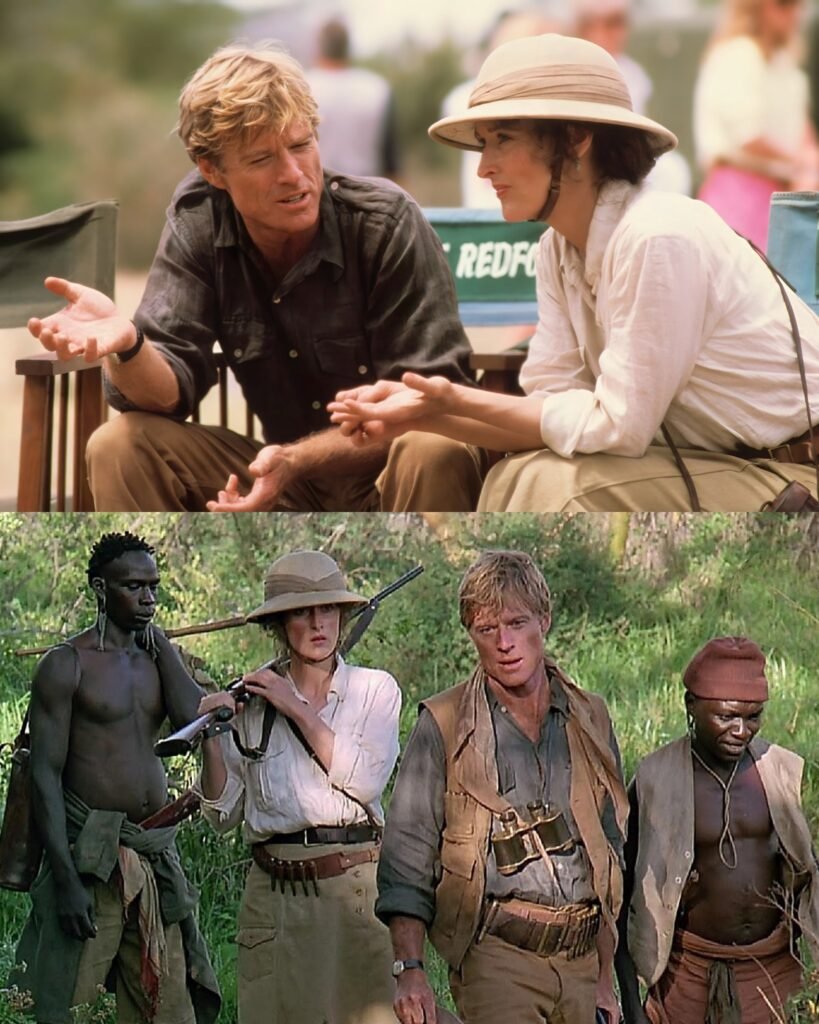
A century later, Johnston’s bones rested quietly in a Los Angeles veterans’ cemetery — far from the mountains that had defined him. When a group of students and townspeople in Cody learned of it, they began a campaign to bring him home. Their mission wasn’t just about moving remains; it was about restoring pride, honoring a symbol of endurance, and preserving the story of a man who refused to be forgotten.
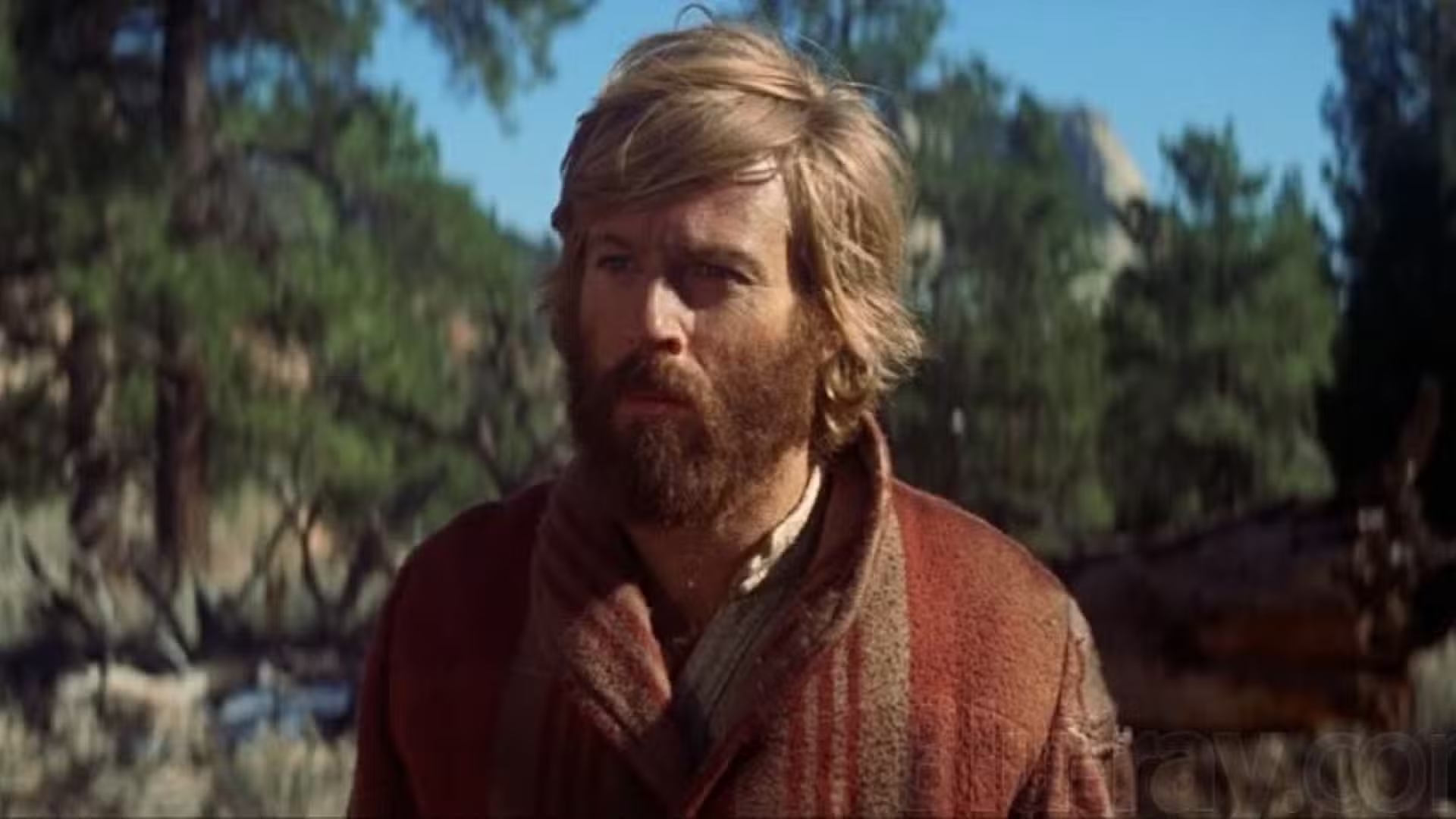
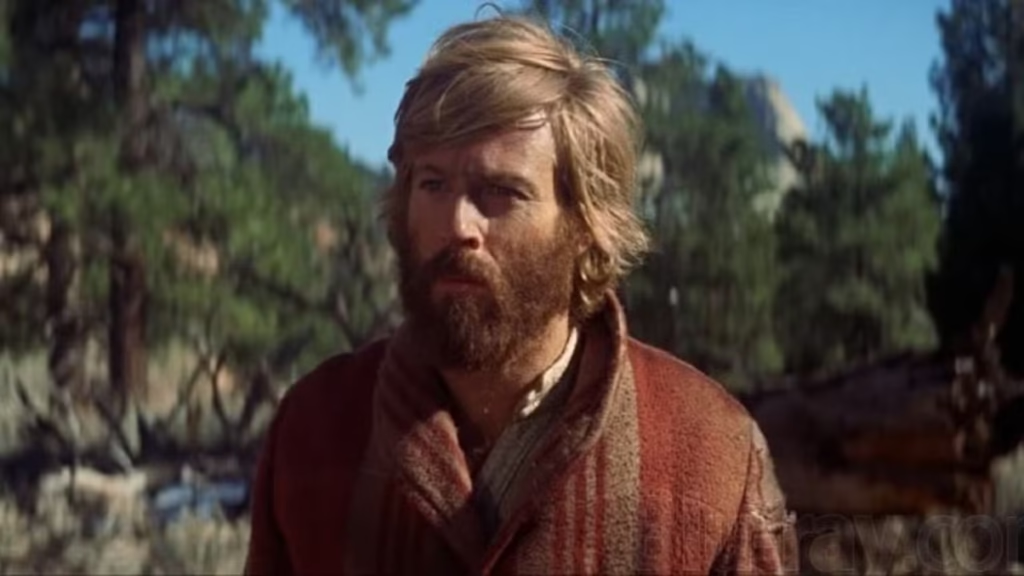
Their effort caught the attention of Robert Redford, who had recently immortalized Johnston on screen in Jeremiah Johnson (1972). Directed by Sydney Pollack, the film captured the lonely grandeur of life in the wilderness and the fragile line between man and nature. Redford’s portrayal turned the mountain man’s myth into something human — a portrait of solitude, loss, and quiet resilience in a world too vast to conquer.
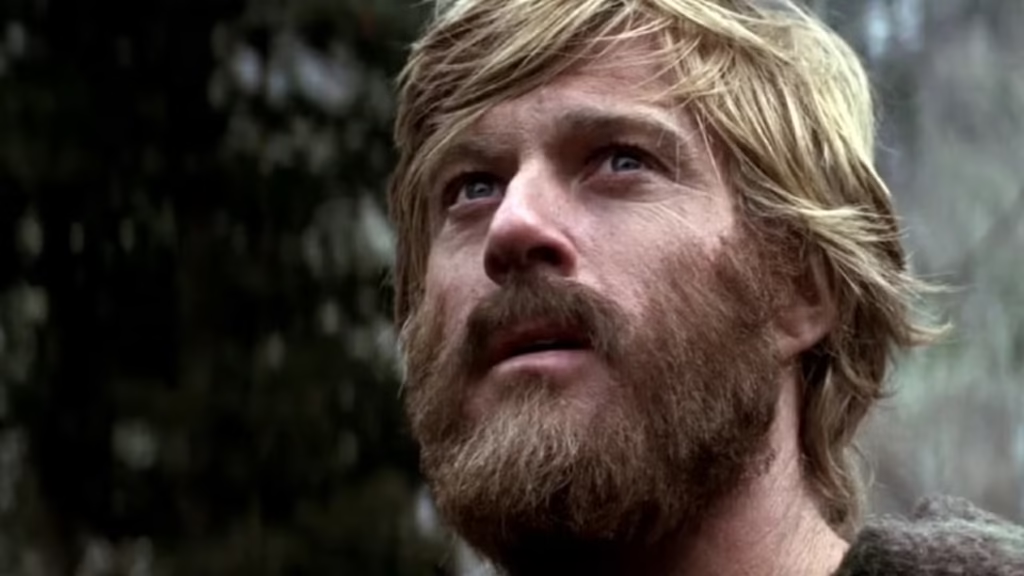
Filming Jeremiah Johnson was no easy feat. The cast and crew battled blizzards, treacherous slopes, and the kind of isolation that blurred fiction and reality. “It was tough, dangerous work,” Redford later said, “but that was the point. We wanted it to feel as real as the life this man lived.” The result was a film that breathed authenticity — every gust of wind and crack of snow echoing Johnston’s restless spirit.
When Redford returned to carry Johnston’s casket, it felt like the movie had stepped into life. Dressed in black, his steady presence transformed the moment into something larger — a symbolic reunion between character and creator. To those watching, it was as if Jeremiah Johnson himself had come down from the mountains one last time to walk beside his own ghost. The image still lingers in American memory.
For Redford, that day held deep personal meaning. He had always been drawn to solitude, silence, and the search for truth in nature — the same instincts that drove Johnston into the wild. Carrying the casket wasn’t an act of performance, but of kinship. It was his way of saying thank you to a man whose life reminded him that freedom, though lonely, is worth every sacrifice.
The people of Cody received Johnston’s return with reverence. The ceremony was simple