
Philadelphia has been shaken to its core — and the rest of America is watching in disbelief — after police confirmed that human remains found in a shallow grave behind an abandoned middle school are “believed to be” those of 23-year-old Kada Scott, a bright, beautiful young woman whose disappearance earlier this month turned from a missing-person mystery into something far darker, far more chilling, and far more damning about the system that was supposed to protect her.
It’s a story that’s part tragedy, part outrage, and part grim déjà vu — because if the suspect now in custody had been kept behind bars after his previous violent incident, there’s a growing belief that Kada Scott might still be alive today.
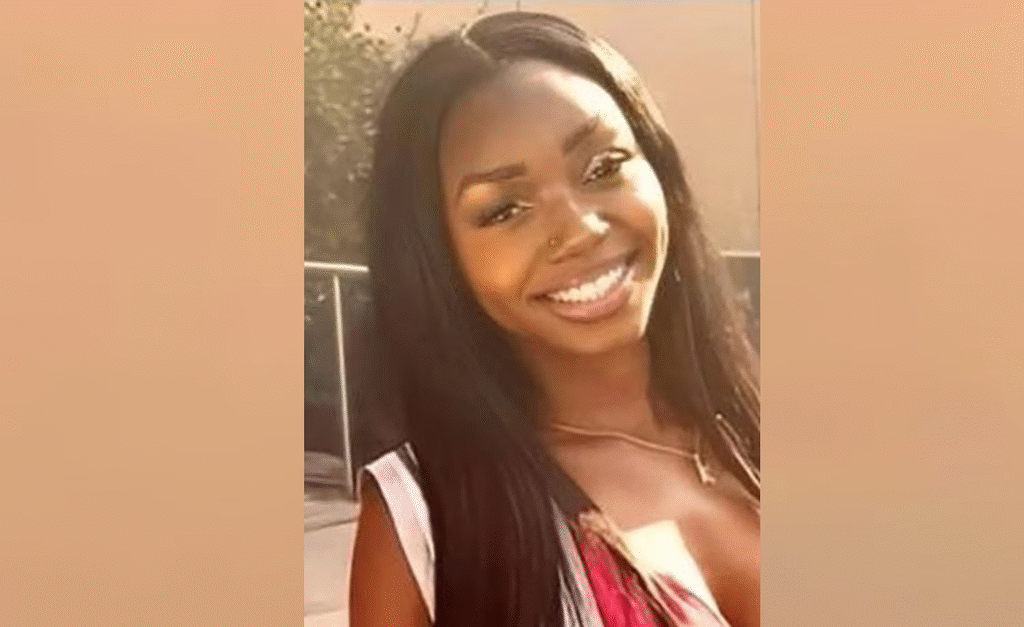
Neighbors call it “the McCallum Street nightmare.” Police call it a “developing homicide.” But for thousands of women across Philadelphia, it’s something even worse: a terrifying reminder that justice, too often, arrives too late.
Kada Scott vanished on the evening of October 4th, after finishing her shift at a senior care facility in Chestnut Hill. She was described by coworkers as quiet but ambitious, someone who “always stayed late to help others” and “never left without saying goodbye.” That night, she never made it home. Her phone went silent. Her social media froze. And within hours, her family knew something was terribly wrong.
They reported her missing the next morning. Police began their usual search — phone pings, neighborhood canvassing, public appeals. Flyers went up around Germantown and Northwest Philly, featuring Kada’s bright smile and long dark hair. But in the days that followed, what started as a desperate search became something far more disturbing.
Friends came forward saying that, for days before her disappearance, Kada had been receiving “harassing phone calls” from someone she knew — a man who wouldn’t stop texting, calling, and showing up near her workplace. The calls were obsessive, intimidating, and relentless. And when police traced that pattern back, one name kept appearing: Keon King, a 21-year-old man with a history of violence and a record that should have been a red flag from the start.
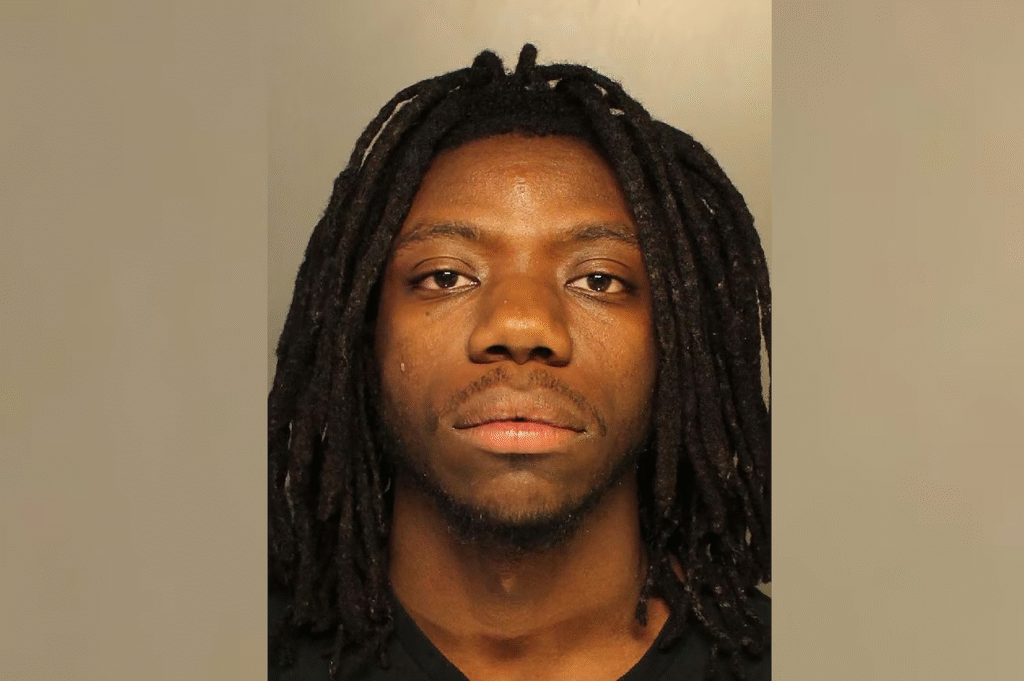
King, as investigators later confirmed, had already been arrested earlier this year in another kidnapping case involving a different woman — a woman who told police he had strangled her, held her against her will, and threatened her life. The only reason that case didn’t move forward? The victim never showed up to court. The charges were dropped. The system shrugged — and Keon King walked free.
Now, that decision may have cost another woman her life.
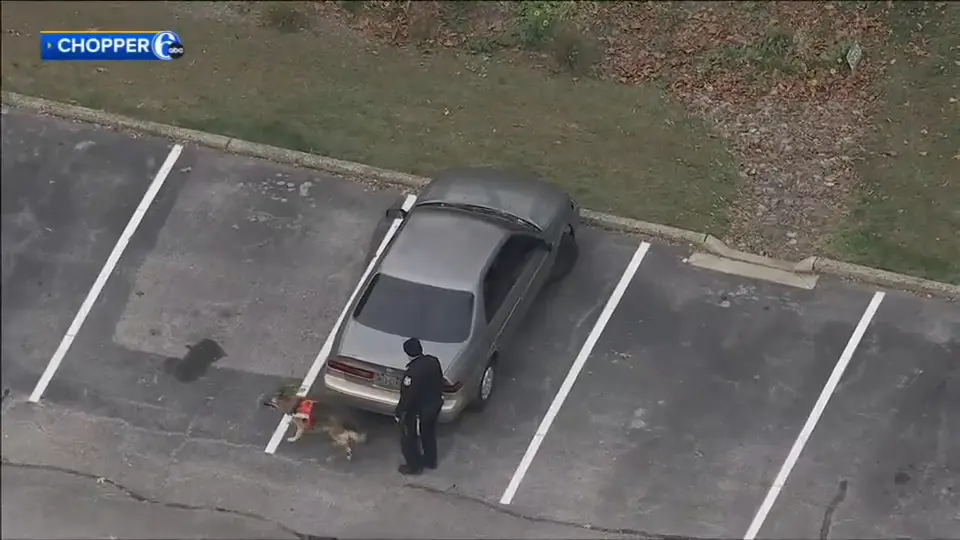
According to police reports, King was the last person known to have contact with Kada before she disappeared. They’d reportedly spoken that night. And not long after, Kada’s car — a gold 1999 Toyota Camry — was found abandoned in a residential parking lot several miles away. No sign of struggle. No phone. No trace of her.
Then, ten days later, came the anonymous tip that changed everything.
Police say it was “very specific.” Someone — they won’t say who — called in to report “something buried” behind the old Ada H. Lewis Middle School, a long-shuttered building surrounded by dense brush and woods. When officers arrived, they noticed disturbed soil, a foul odor, and what appeared to be freshly dug earth beneath a piece of discarded plywood. Beneath it, investigators discovered human remains — partially buried, badly decomposed, but consistent with the physical description of Kada Scott.
The discovery triggered a media storm across Pennsylvania and beyond. Within hours, police had cordoned off the entire site, deploying cadaver dogs, forensic teams, and evidence units. But even as they worked, one question echoed across social media: how did it come to this?
How did a young woman with everything ahead of her — a job, a family who loved her, friends who cared — end up in a shallow grave behind an abandoned school while the man suspected of terrorizing her was out on bail, free to strike again?
For many Philadelphians, it’s a pattern they’ve seen before: a system that bends over backward to give second chances to dangerous offenders — while leaving women like Kada to fend for themselves. The hashtag #JusticeForKada exploded on X (formerly Twitter) and TikTok within hours of the news breaking. By Sunday morning, hundreds were gathering near the crime scene, holding candles, signs, and tears, demanding accountability not only for the man accused — but for the institutions that failed to stop him.
Police say they are awaiting official confirmation from the medical examiner before declaring the remains to be Kada’s. But even without the paperwork, few in the city doubt what’s been found. “We’re heartbroken, but we’re not surprised,” one of Kada’s relatives said in a trembling voice during a Saturday vigil. “We kept warning people she was in danger. We told the police. We told everyone. And now look.”
Behind those words lies a haunting paper trail of red flags that now reads like a list of missed opportunities.
In January, Keon King was charged in a kidnapping case after allegedly luring a woman into his car, choking her until she lost consciousness, and holding her captive overnight. That woman escaped and pressed charges. But when she failed to appear in court months later, the case fell apart. Court records show the charges were dropped “without prejudice,” meaning prosecutors could refile them — but they didn’t. King was released.
Now, nine months later, he’s back behind bars — this time charged with kidnapping and stalking in connection to Kada’s disappearance. His bail: $2.5 million.
It’s a grim echo of an all-too-familiar story: a system designed to protect the accused, not the vulnerable. “If that earlier case had gone to trial, if someone had followed up, we might not be standing here today,” said one police source involved in the investigation.
But the deeper this case goes, the stranger it becomes.
Who placed the anonymous tip that led police to the shallow grave? Was it someone who knew King? Someone involved? Or a random passerby who stumbled across something they shouldn’t have? Investigators are tight-lipped, calling the tipster’s information
“remarkably detailed” — enough to pinpoint the exact location of the burial site, down to the yard behind the school. That level of specificity has fueled speculation that the caller may have been close to the suspect, or even part of the circle that helped conceal the crime.
And what about the timing? The tip came after King’s arrest — leading some to wonder whether his detention triggered a wave of panic among those who might have known what he’d done. “Someone wanted this found,” one local reporter said on air. “The question is why — and why now?”
Meanwhile, the autopsy results could hold crucial answers. How long had the body been there? Was Kada killed the night she disappeared, or kept alive for days? Did anyone nearby hear anything? Detectives say the site is just yards away from where children play and locals walk their dogs. “It’s horrifying,” said one Germantown resident. “That poor girl was lying there for who knows how long, and nobody knew.”
Adding to the outrage is the revelation that this isn’t just about one man or one victim. Sources inside the Philadelphia Police Department say they’re reviewing other unsolved cases — missing women, violent abductions, unexplained disappearances — to see if there are links to King or his known associates. “We’re not ruling anything out,” one detective said.
For Kada’s family, none of it makes sense. Her mother, visibly shaken during a recent interview, described her daughter as “a light — someone who loved people too easily.” Friends say Kada was trusting, empathetic, and quick to forgive — qualities that may have put her at risk. “She didn’t think bad things could happen to her,” one said. “She believed people could change. She didn’t see the danger until it was too late.”
And yet, the signs were there. The phone calls. The texts. The fear that crept in during her final days. “She said he wouldn’t stop,” recalled one friend. “She was scared, but she didn’t want to cause trouble. That’s what breaks my heart — she didn’t realize she was the trouble he wanted.”
Online, the outrage has been relentless. Users are calling out not only the suspect but the judges, the prosecutors, and even the state’s bail system. “How many women have to die before someone fixes this?” read one viral post. Another simply said: “You let a predator go free, and now a mother’s burying her child.”
The Philadelphia District Attorney’s Office has declined to comment on whether the earlier dropped kidnapping case influenced their current strategy. But legal experts say it could play a major role if the current charges evolve into a homicide prosecution. “It’s pattern evidence,” said one former prosecutor. “You show that this man has done this before — that he has a signature — and it helps establish intent.”
The public isn’t waiting for a courtroom. They’ve already rendered their verdict.
On TikTok, a video montage of Kada smiling with her friends has already amassed millions of views, paired with the caption: “She just wanted to go home.” In the comments, women from across the country are sharing stories of their own — the ex who wouldn’t stop calling, the stalker who showed up outside their jobs, the police reports that went nowhere. For many, Kada’s story isn’t just one tragedy. It’s every tragedy.
And through it all, the same question keeps surfacing: Why did it take a “very specific anonymous tip” for the truth to come out? Why not the first 911 call, the first police report, the first sign of danger?
There’s something brutally symbolic about where she was found — behind a crumbling public school, forgotten by the city, overgrown with weeds and neglect. “It’s like a metaphor,” one local pastor said during a vigil. “We fail our young people, we fail our women, and then we pretend to be shocked when evil finds them in the dark.”
For now, the investigation continues. The forensic results will come in. The legal process will drag on. But for Kada Scott’s family — and for an increasingly furious city — the real trial has already begun. The trial of a system that let a dangerous man slip through its fingers. The trial of a culture that tells women to be careful, instead of telling men not to be predators.
Late Sunday night, as candles flickered outside the crime scene and police tape fluttered in the wind, a handwritten sign appeared on the fence. It read: “We told you she was missing. You didn’t listen.”
It’s a message that now hangs over the entire city — a message that won’t fade, even after the case file closes.
Because in the end, this isn’t just the story of Kada Scott. It’s the story of every time a warning went ignored, every time a victim wasn’t believed, every time a life was buried — literally or figuratively — behind a wall of silence and bureaucracy.
And as the city of Philadelphia mourns another young woman taken too soon, one truth becomes impossible to ignore: the monster wasn’t hiding in the shadows. He was right there, in plain sight, protected by the very system we’re told keeps us safe.