When Olivia Wilde’s Don’t Worry Darling hit theaters in 2022, it immediately divided audiences — not just for its glossy aesthetics and star-studded cast, but for the questions it dared to ask beneath its shimmering surface. Wrapped in the allure of 1950s suburbia, the film is a slow-burn psychological thriller that turns beauty into a weapon and perfection into a prison.
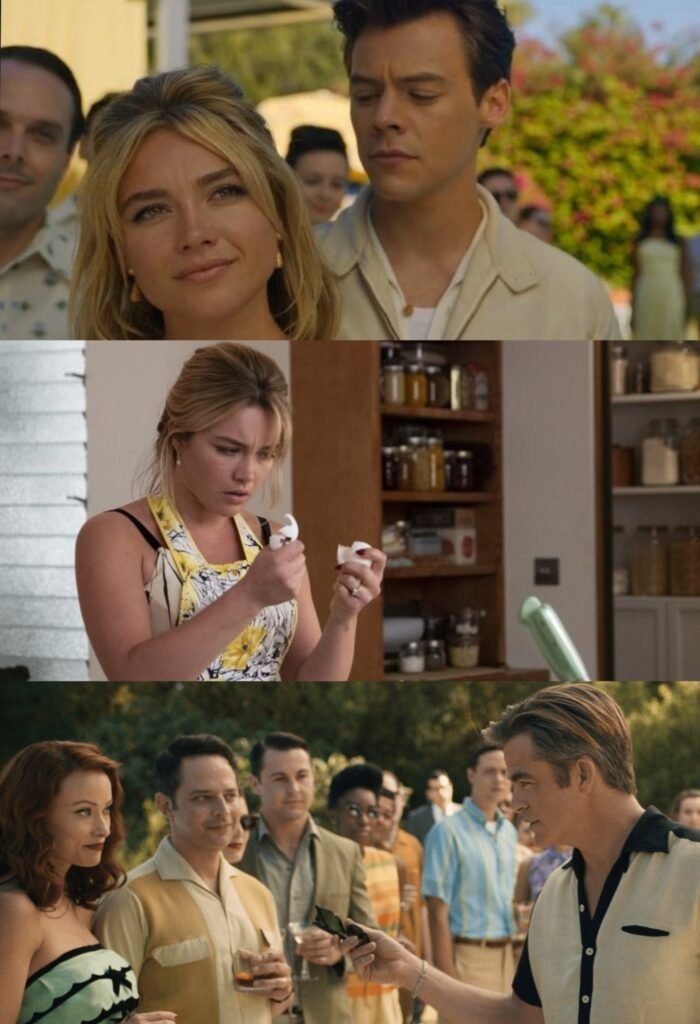
Set in the fictional desert community of Victory, the film introduces us to Alice (Florence Pugh) and Jack (Harry Styles), a picture-perfect couple living in what seems like domestic paradise. The men work for the enigmatic “Victory Project,” while the women stay home to cook, clean, and radiate happiness. It’s a meticulously crafted world — one that hides something sinister beneath its pastel skies.
Florence Pugh commands the screen with breathtaking power. Her portrayal of Alice transforms from cheerful devotion to creeping suspicion, and finally, desperate rebellion. With every glance and tremor, she captures the unraveling of a woman whose reality no longer fits the lies she’s been told.

Harry Styles, as Jack, offers a charming yet opaque performance. He’s convincing as the loving husband — until his mask begins to slip. His chemistry with Pugh occasionally flickers, but it’s her energy that propels the relationship into emotional turbulence.
Chris Pine, meanwhile, is magnetic as Frank — the visionary leader of Victory whose charm masks manipulation. Pine’s calm, confident menace lingers in every word, turning his scenes with Pugh into intellectual duels charged with psychological tension.
Visually, the film is a feast. The cinematography by Matthew Libatique captures the 1950s dreamscape in golden tones and flawless compositions. Every frame glows — from the turquoise convertibles to the crisp pleats of a housewife’s dress — creating a world so polished it feels suffocating.
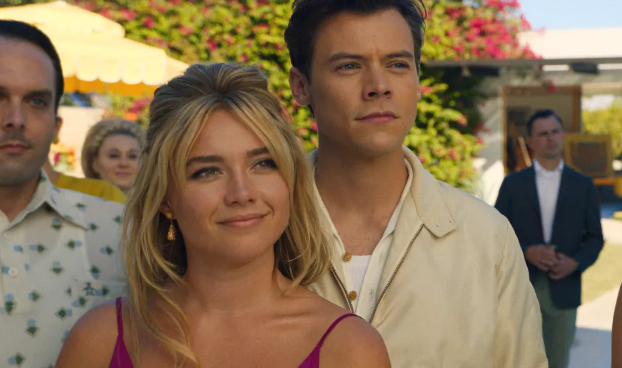
But beneath that glossy veneer lies a growing sense of claustrophobia. Wilde masterfully builds unease through repetition — the routines, the smiles, the synchronized movements — until the audience feels the same trapped desperation that consumes Alice. The result is both hypnotic and haunting.
The story’s eventual twist pulls back the curtain on Victory’s true nature — revealing a dark, modern commentary on autonomy, gender dynamics, and digital delusion. Yet while bold in concept, the revelation leaves more questions than it answers, straining under the weight of its own ambition.
Still, Don’t Worry Darling succeeds as an allegory for control and the cost of conformity. It’s a mirror held up to the fantasies we build to escape reality — and the danger of surrendering freedom for comfort.
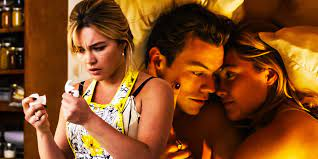
Florence Pugh’s performance anchors the chaos, turning an imperfect film into something unforgettable. Her defiance becomes the film’s moral pulse — the beating heart beneath all the artifice.
Ultimately, Don’t Worry Darling may not achieve the depth it strives for, but it dares to confront illusion head-on. Through its shimmering style and simmering dread, it reminds us that even paradise can be a cage — and sometimes, breaking free is the only way to truly live.